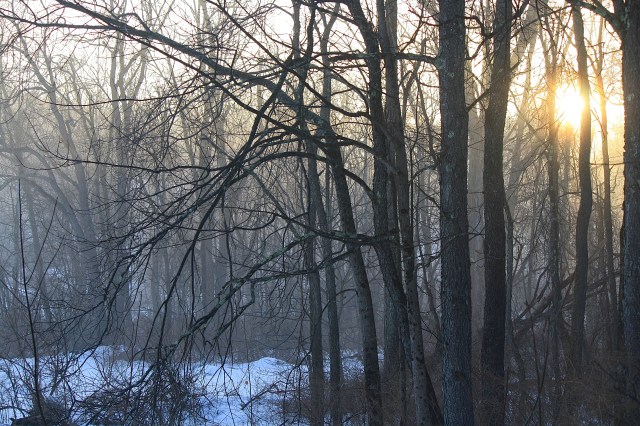
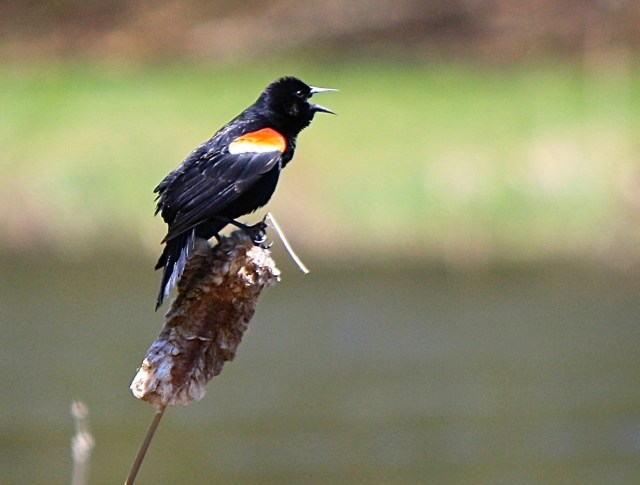
 Spring is here with the calls of red-winged blackbirds, muddy roads and buckets hung on maple trees, which are tapped to collect their sweet sap. Although this winter was very mild, generally New Englanders wait a long time for spring to arrive. A blogging friend from California once commented, “I like the Northeast very much, but I’m astonished that people can maintain such patience and appreciation in living where winter has been so long and harsh.” I had to laugh because I myself often wonder about the state of my sanity living in this climate! Yes, we are a bit crazy to deal with the cold and shoveling lots of snow, but we are rewarded come summer when most of the U.S. is sweltering, we live comfortably with temperatures in the upper 70s and 80s F (20-30 C). We have only a few hot days in the 90s F (35 C), but most days are tolerable and not too humid.
It is the long deprivation we endure in winter that heightens our appreciation when the warmer weather finally does arrive. Walking about this past week, I was quite ecstatic! Like Maria singing, “The hills are alive with the sound of music!”
When I drive past a local sugarhouse and see steam billowing out of the roof vent, I’m pleased to note another official sign of spring.

Boyden Bros. Sugarhouse boiling maple sap.
I published about the process of maple sugaring a couple of years ago, but thought I’d post again detailing this ancient practice that white settlers learned from the native Americans.
Howard and Jeanne Boyden, along with their two sons and an army of helpers, have been collecting and boiling sap to make maple products for most of their lives, as have several generations of Boydens before them. (Howard’s ancestors were among the founding fathers of this town back in 1767.) They are also some of the nicest folks you could ever hope to meet.
The process of turning maple sap, which comes out of the sugar maple tree (Acer saccharum) at 98% water and 2% sugar, into maple syrup which is 33% water and 67% sugar, is a lengthy one. It requires a lot of work and sometimes very long days. The season in which sap flows at its tastiest is short, occurring at the end of the winter when the weather turns to spring.
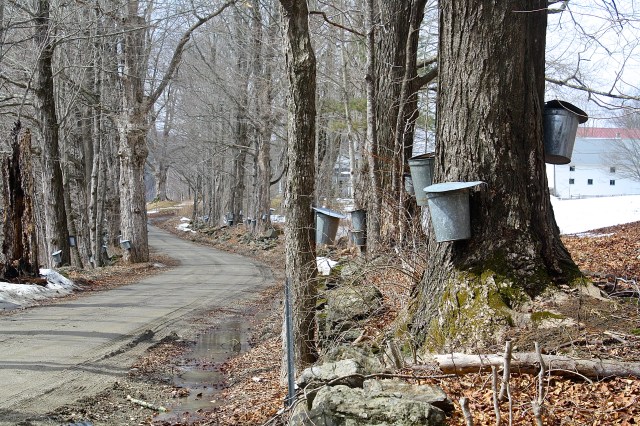
Maple buckets line a road during Mud Season.

Sap is running! Drip, drip, drip!
Trees are tapped with special spigots that drip sap into buckets or through a series of tubing that empty into holding tanks. Here’s where the army of helpers come in, driving pickup trucks with larger tanks strapped on, they empty the buckets and siphon out the holding tanks, then transport the sap to the sugarhouse. On days the sap is really running, they may make several trips a day.
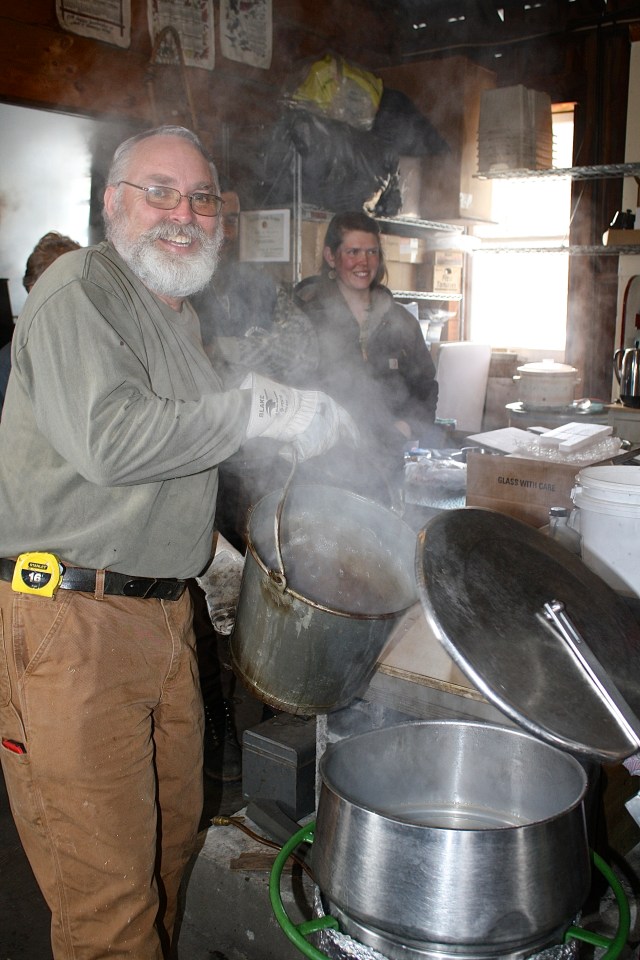
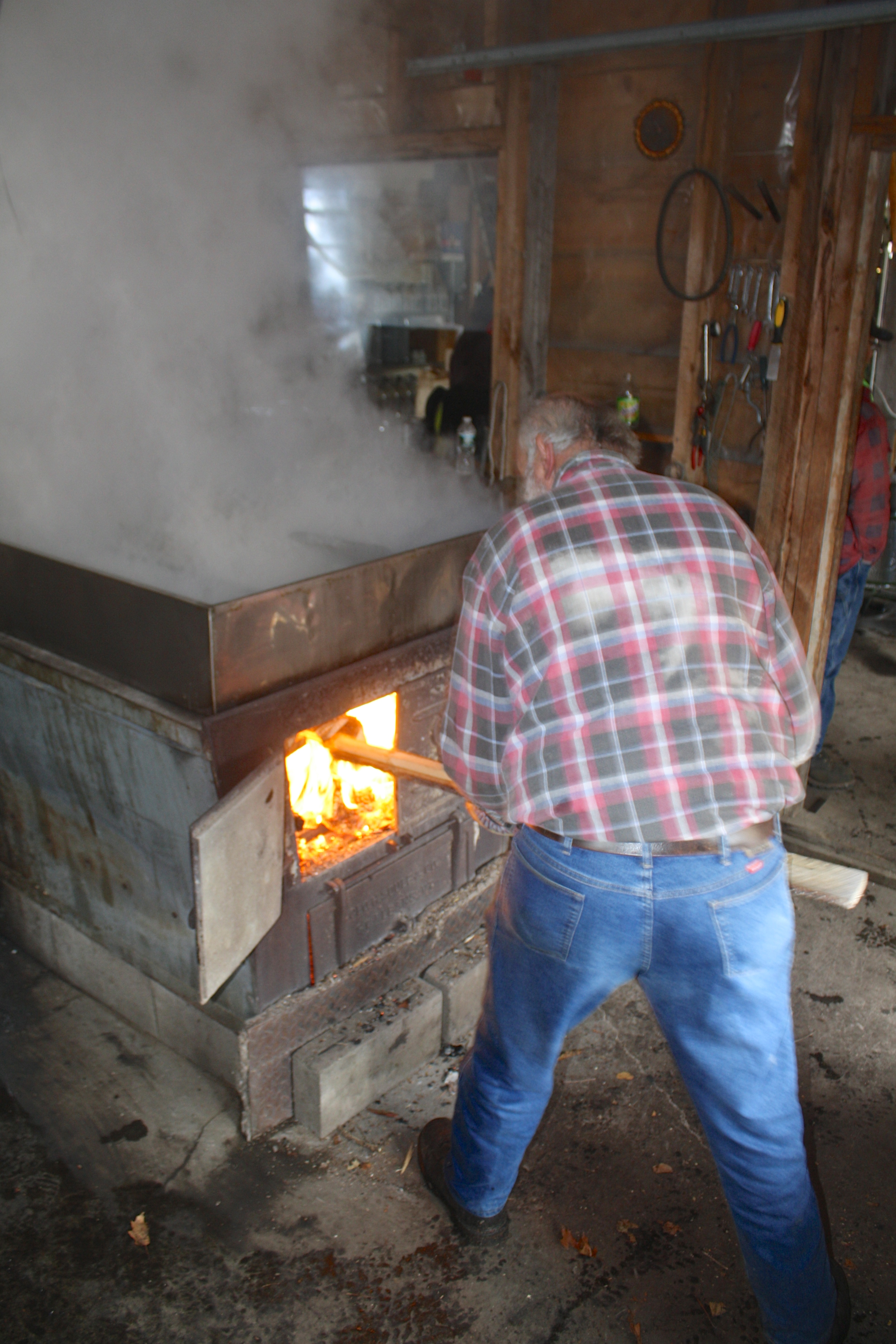
Using a specially-designed evaporator, the sap is boiled through a series of channels until it reaches 219.5 degrees F (104.1 C), the right consistency for maple syrup. It takes roughly forty gallons of sap to make one gallon of syrup.

Howard tending the evaporator – the humid air smells sweet!

Batch adding wood to the blazing fire beneath the evaporator.
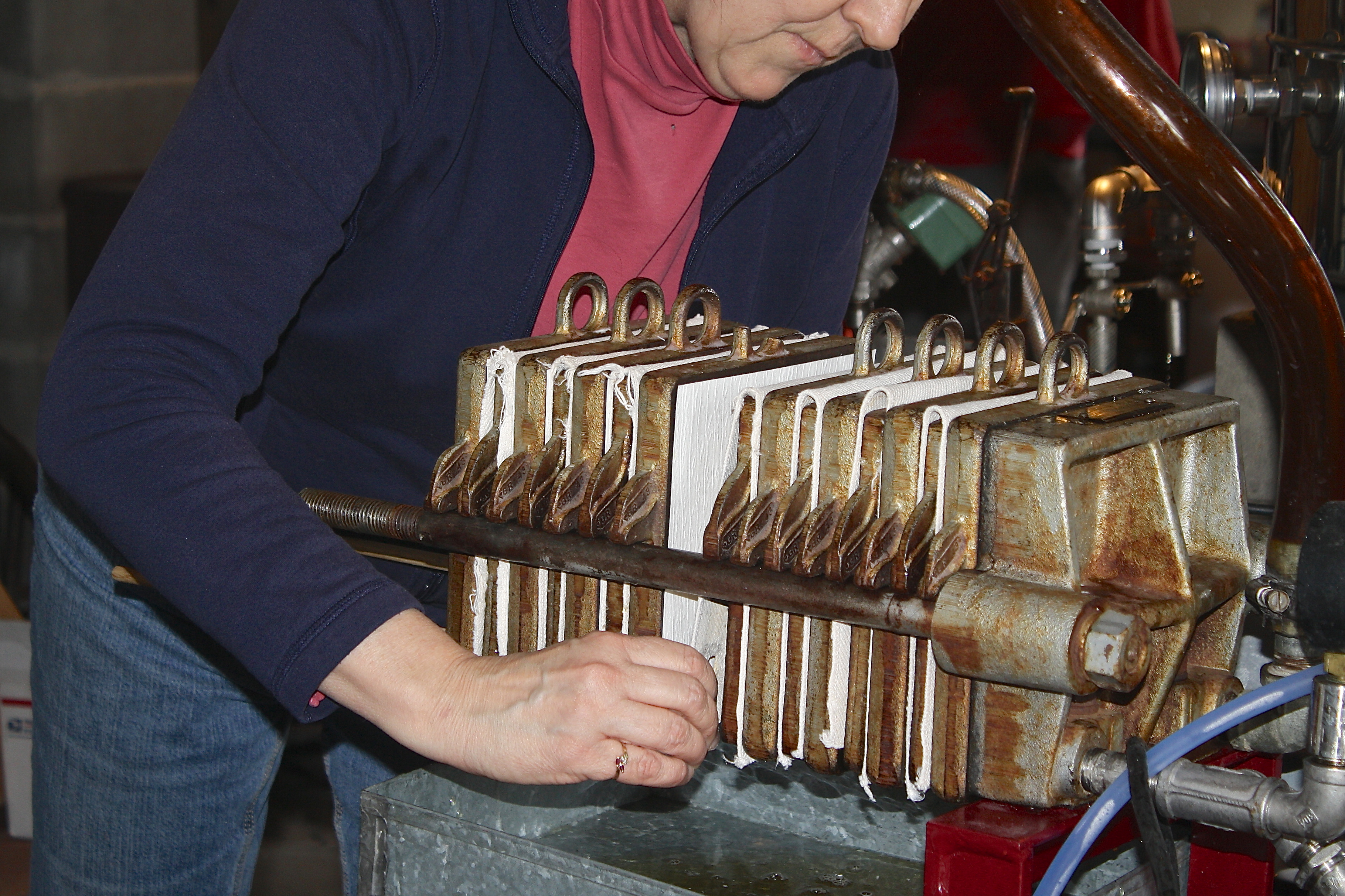
The syrup is then put through a filter and bottled.
Freshly made syrup goes into the filter press.
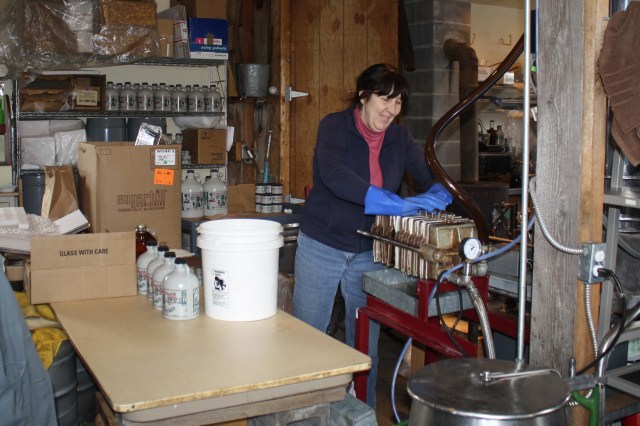
Jeanne changes the filters periodically throughout the day.

Jeanne adjusting newly changed filters.
The syrup is graded by its translucence. There are two grades, A and B. Grade A, which is divided into three categories – Light, Medium and Dark Amber – is considered the finest, what we put on pancakes, for instance. While B, darker with a heavy maple flavor, is used for cooking and baking. The first run of the season is very light and each run becomes darker.
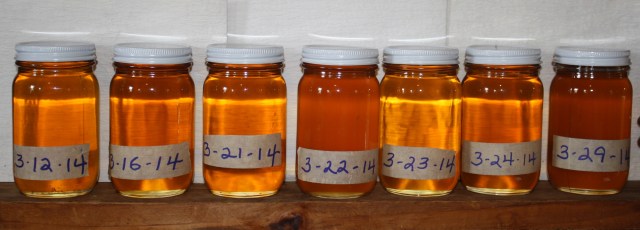
Each daily run is graded.
Weather, particularly temperature, affects the run and length of the season. If the temperature does not rise above freezing, the sap doesn’t flow. So the gaps in dates you see above may indicate cold periods. Best flow is achieved when the temperature rises into the 40s F (5 C) during the day and below freezing at night.
This year, the syrup season started in mid-February, nearly a month earlier than the past two years and is now over due to warm temperatures in 50s and 60s F (10-15 C). Every year is different, but the trend seems to be shorter winters and therefore earlier sugaring seasons. Maple trees need long, cold winters and many farmers fear that climate change will affect the health and vigor of their sugar groves and end sugaring in this region. The threat makes me appreciate the gifts we enjoy today all the more.
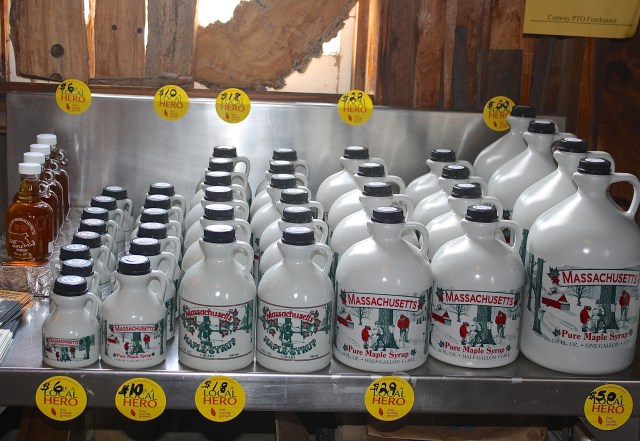
The delicious finished product!
The Boydens also make maple cream, which is made by further boiling and whipping the syrup (OMG, if you’ve never tried maple cream, you are seriously missing out on one of the world’s most amazing treats!) as well as candies shaped like maple leaves and hearts. At Christmastime, they offer ones shaped like little conifers and stars. Their prices are very reasonable, given all the work that is involved, and they accept mail orders. They may be reached at boydenmaple@gmail.com. and are a CISA member.
For more information about maple sugaring in Massachusetts, visit the Massachusetts Maple Producers Association.
For a brief history of maple sugaring, originally introduced by the Native Americans to European settlers, read here.
Related article (in depth explanation of current sugaring technology): Sugaring 2013 – The New Evaporator











 Eliza Waters