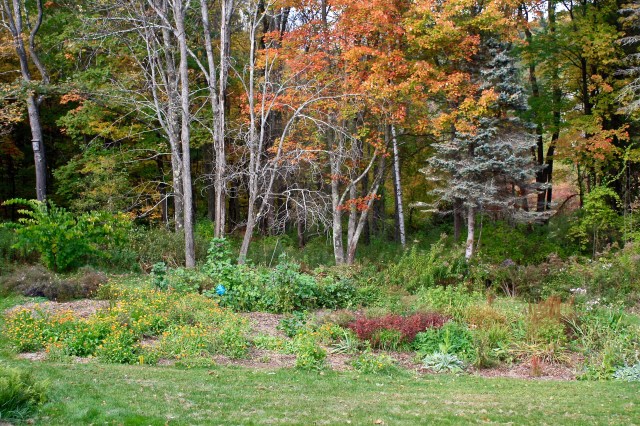
October 18, 2016
Since I received a few requests for one last look at the garden post-frost, I thought I’d oblige. I’ve removed the sad remnants of annuals, so the look is rather sparse. However, the maple foliage more than makes up for it. 
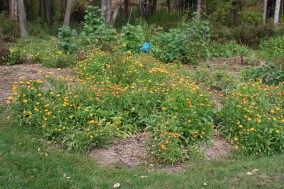 The half-hardy calendula (C. officinalis) continue to put forth gold and orange blossoms, for which I am grateful. The past two afternoons, a late migrating monarch has come to feed, so I am glad I had something to offer it.
Along the front, you can now see both mounds of silvery lamb’s ears (Stachys byzantina). The left one was hidden all summer by an ambitious calendula, which I’ve removed.
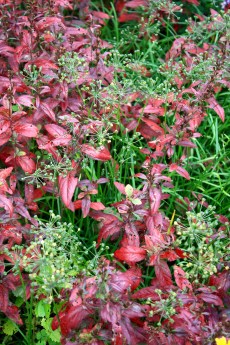
The real stand-out is the beautiful, red foliage of the sundrops (Oenothera fruticosa).
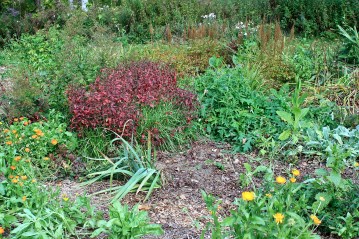 The globe thistle (Echinops ritro) continues to push forth its new flower buds; it just might bloom before the deep cold sets in.
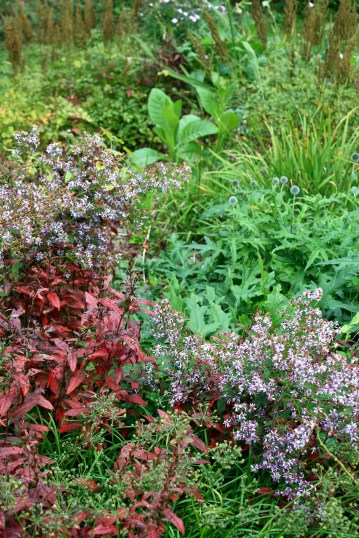
 As the coneflower (Echinacea purpurea) self sows a bit too enthusiastically, I’ve cut back most of the seed heads and moved many plants to the half-wild herb bed next to the field, where it can go as crazy as it wants.
The blood grass (Imperata cylindrica ‘Red Baron’), though small, deepens in color.
Directly behind it, in the far back almost into the woods, the purple New England Aster (Symphyotrichum novae-anglia) still blooms.
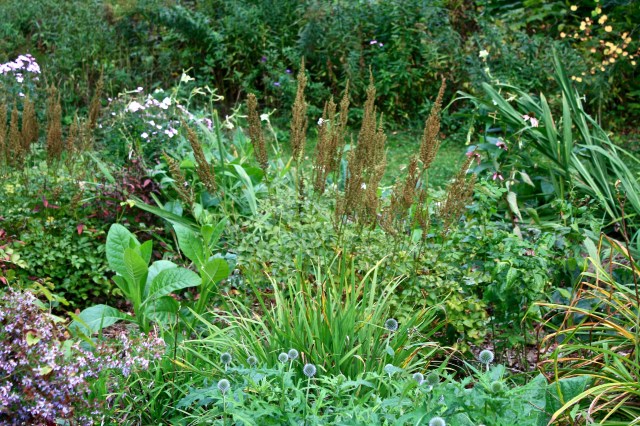 The astilbe seed heads are rusty brown, the daylily foliage turns golden brown and some late-sown white flowering tobacco (Nicotiana alata) bloom here and there.
I’m linking with Cathy at Words and Herbs, joining participants taking weekly photos of the same garden over the course of the growing season to note its evolution.
Below are some of the previous views for comparison:

April 1, 2016

June 28, 2016
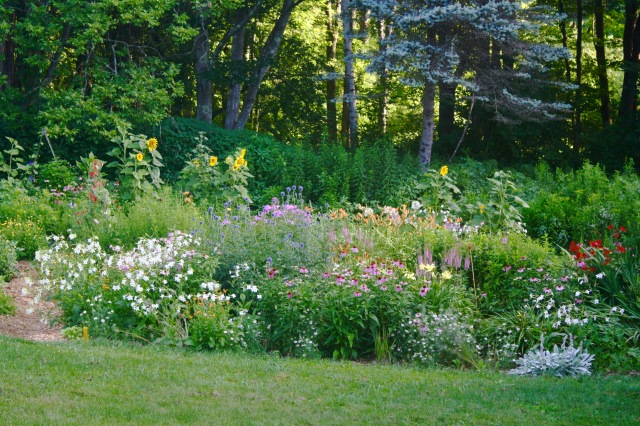
July 26, 2016
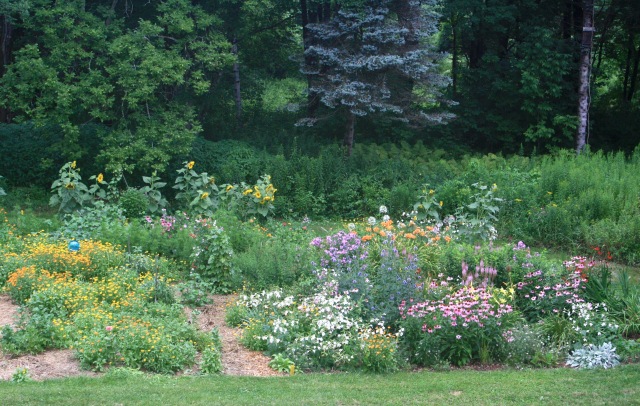
August 2, 2016
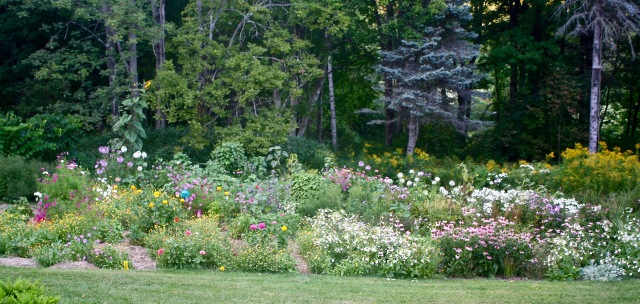
September 6, 2016
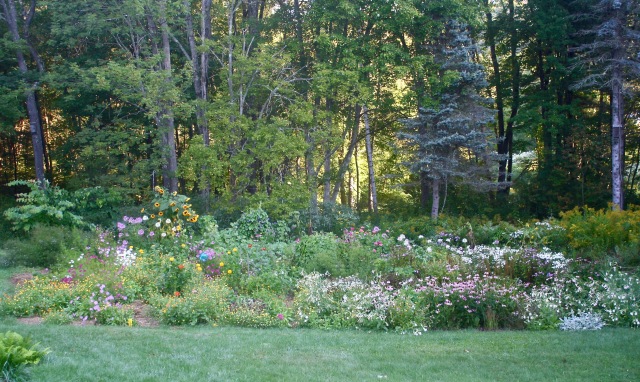
September 13, 2016
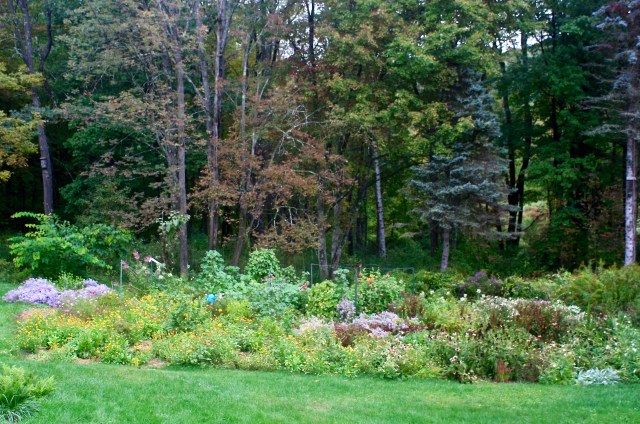
October 4, 2016



 My sunflower pocket vase, another from my collection of hand-painted pottery made in Ecuador by
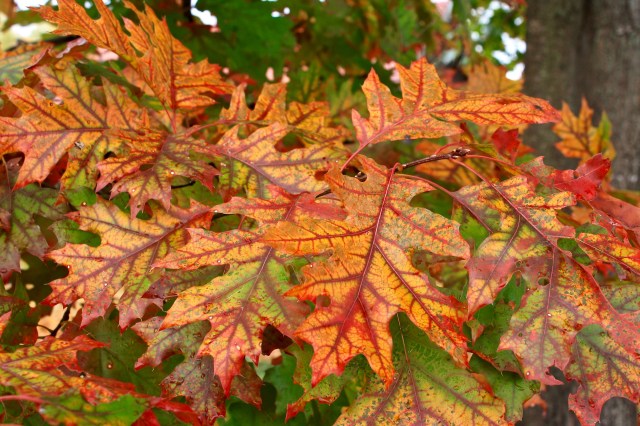
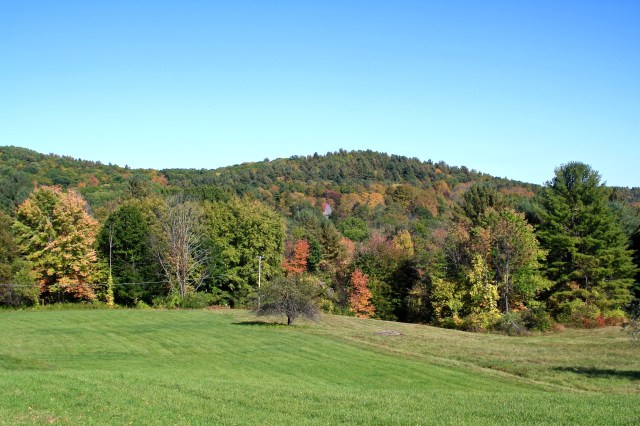
  The past week has seen several frosts that have ended my annuals, deepened the colors of perennials such as Sedum ‘Autumn Joy’ and leaves of the maple, ash and birch trees around my yard.
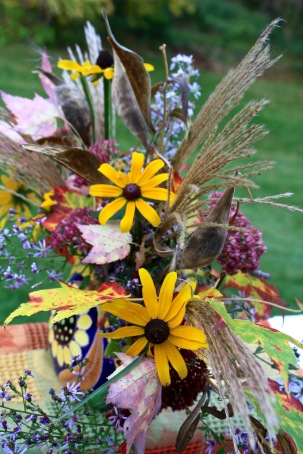 Black-eyed Susan (Rudbeckia hirta) have sent up a flush of new blooms and used here, reflect the sunflower on the vase. A few dried milkweed pods (Asclepias tuberosa) signal the end of the garden year.
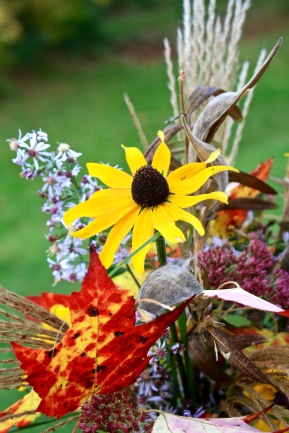 While the heart-leaved asters (Symphyotrichum cordifolium) in my main garden are done blooming, the woodland edges still have plenty to offer and I never tire of using them as filler. The harlequin foliage is swamp maple (Acer rubrum) and maiden grass (Miscanthus sinensis ‘Gracimillis’) offers a vertical splash.
 Thanks to Cathy at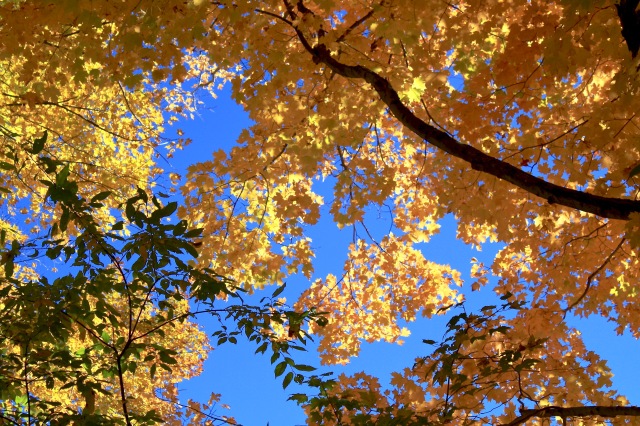
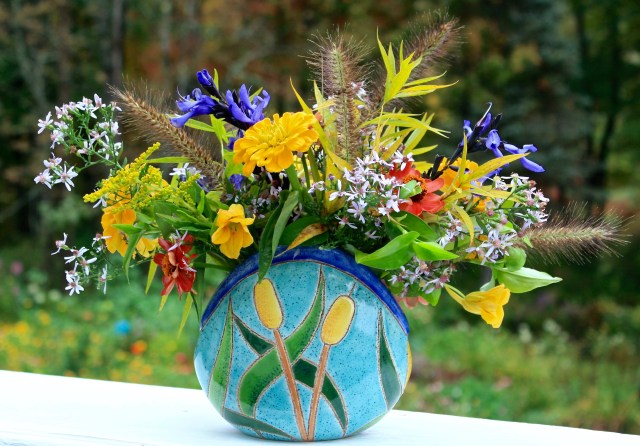 This week’s flower colors reflect the yellow and red-orange autumn foliage in the background. I’m using another of my hand-painted, pocket vases made in Ecuador by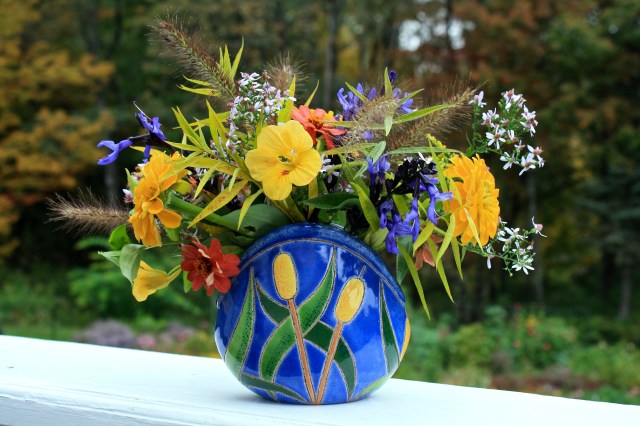


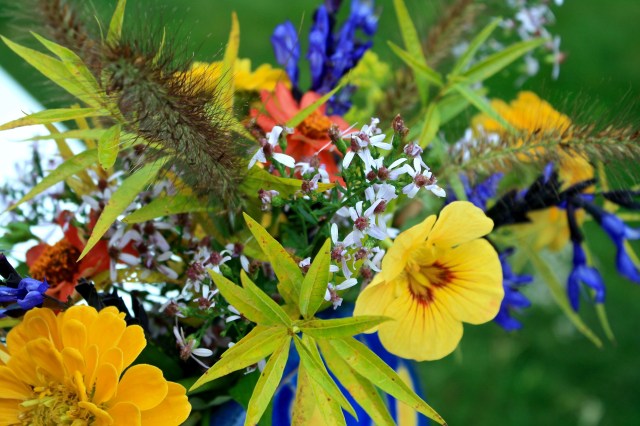 I’ve used pointy-leaved blue star (Amsonia tabernaemontana) foliage, which is turning to gold and common spiderwort (Tradescantia ohiensis), a fresh shade of green that matches the leaves on the vase. Vertical accents are fountain grass seed heads (Pennisetum alopecuroides).


 Eliza Waters