 As you probably are aware, April 22 is Earth Day, when we celebrate our beautiful Mother Earth. However for gardeners, I think every day is Earth Day, in that we demonstrate caring for the planet through our gardens.
 It distresses me that our Earth is still in peril despite measures taken since the first Earth Day in 1970. Our lifestyle, which many take for granted, creates greenhouse gases and nearly every action puts more into the atmosphere, adding to climate change. Even the smallest things we do as individuals, when spread across many shoulders, leads to big impacts for better or worse.

Seeking ways to reduce my carbon footprint, I wondered about ways to reduce in my gardens, other than carbon absorbtion facilitated through plants. Rototilling garden soil releases greenhouse gases, not just the exhaust from the machine doing it, but gases stored in the soil itself. No-till gardening uses mulch, which reduces the need to weed and cultivate, adds organic matter to the soil and holds these gases within the soil. Microorganisms and fungi within the soil also are supported and this enables even more carbon retention.
 Costly pesticides and fertilizers are petroleum products, so practicing organic methods are another way to reduce. The Amish, who don’t use chemicals, actually have greater yields per acre than their neighboring farmer up the road who does.
An estimated 17% of all fossil fuel consumed in the USA goes for food growing, harvesting, processing, shipping, packaging and distribution. Organic production cuts this by about 30%. In the U.S., the average bite of food travels 1,500 miles from farm to table. Raising food at home or buying local organic food saves significantly.
Meat production has a larger carbon footprint than vegetative production, since animals produce methane and consume grain, adding an extra step in the food chain. If you make a couple of meals each week meat-free, eat 10-20% less at every meal (which sheds those extra pounds you may have been meaning to lose anyway), you’ve changed the world!
 Nearly every single thing we consume has a carbon footprint. By looking at what we consume and asking ourselves how we can reduce, each of us can take small steps, which together add up to make a huge impact. Our and future generations’ lives will be affected by the actions we take today. Make a pledge now in honor of Earth Day to change your world. For more ideas, visit http://www.earthday.org/take-action/
 The Japanese quince (Chaenomeles japonica) hedge is in full bloom this week, drawing in bumblebees, a flashy male Baltimore oriole and our summer resident ruby-throated hummingbird.
 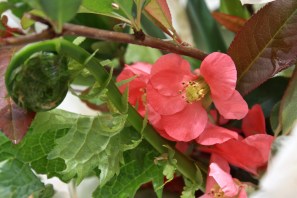 It is not a plant I love– its exuberant growth must be trimmed frequently, its rhizome suckers and thorns are annoying, but it is forgiven every spring when it blooms.
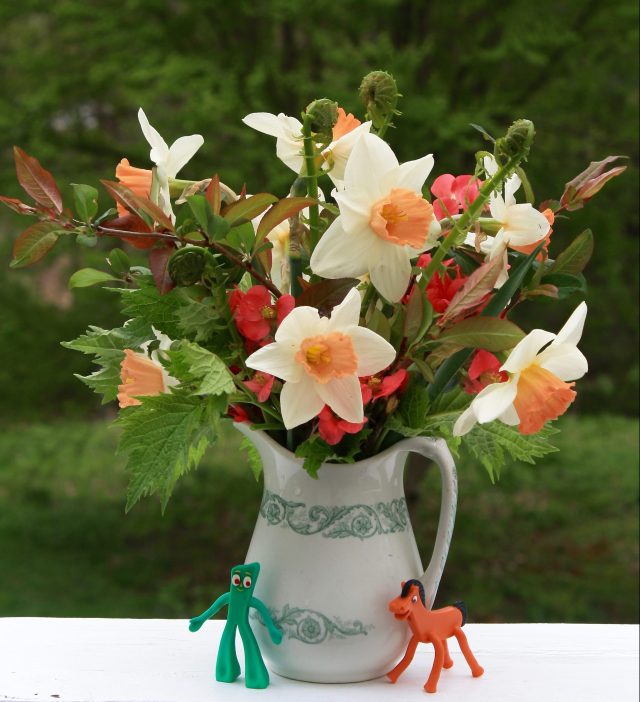
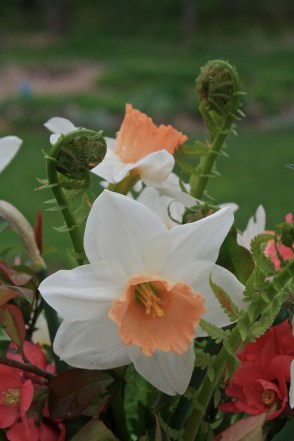 Narcissus ‘Salome’s peachy trumpets seemed a good complement to the coral quince and its reddish-bronze new leaves. For foliage, I added bright green Patrinia gibbosa and a few Ostrich fern (Matteuccia struthiopteris) fiddleheads.
 Does anyone recognize Gumby and Pokey? As a child I watched their primitive claymation antics on TV faithfully. I wished I could lift my leg back and skate quickly and magically the way Gumby did! I saw Pokey’s orange coat and thought he’d be a good prop for today’s arrangement.
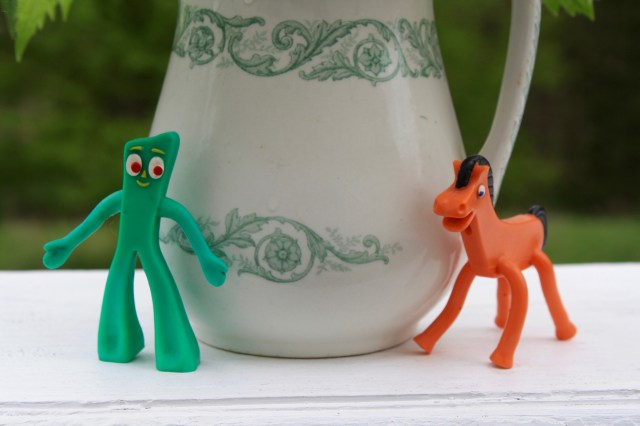 The pitcher belonged to my grandmother and is J & G Meakin English ‘Waldorf’ ironstone from Hanley.
 via
via 



 A neighbor has a field full of narcissi and sells them at 1950’s prices – impossible to pass up. I brought home this armload and made three arrangements. Not only beautiful to look at, they are deliciously fragrant as well.


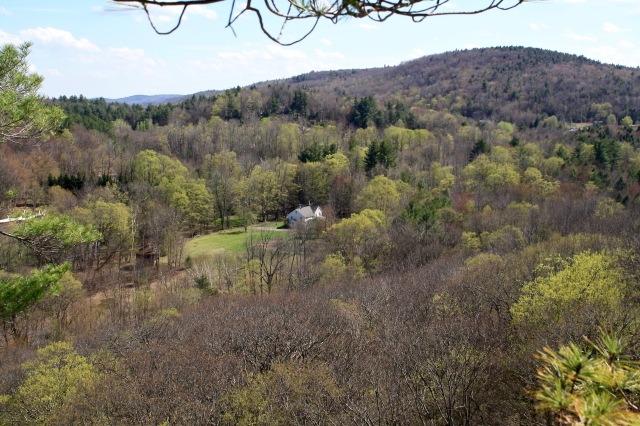

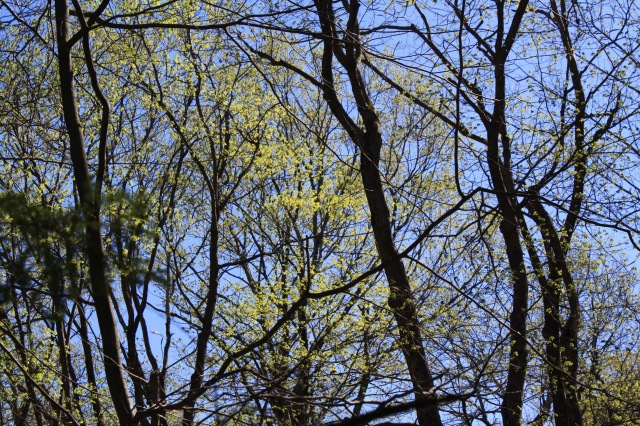
 ‘Ice Follies’ narcissus and clumps of past-bloom bloodroot are in the woods beyond. For comparison, my last view was posted March 21. What a difference a month can make!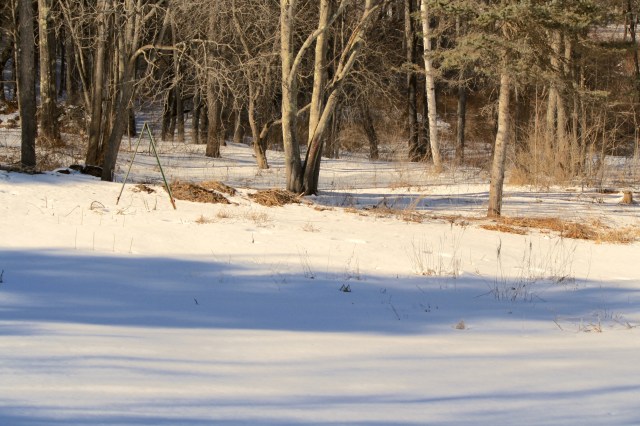
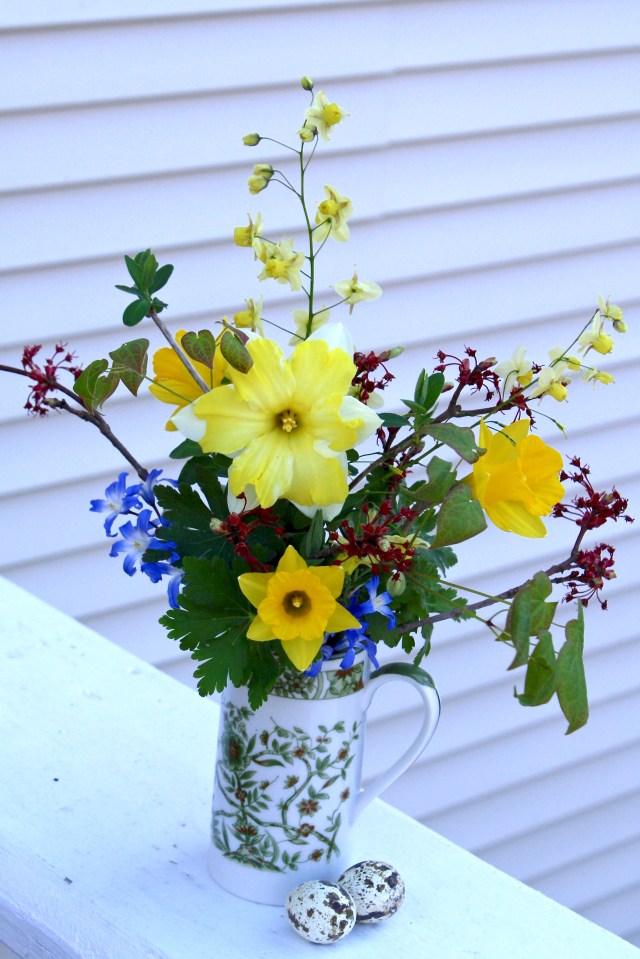 Flowers are bursting forth, birds are nesting… Spring is all about sex and reproduction – a spring fling!
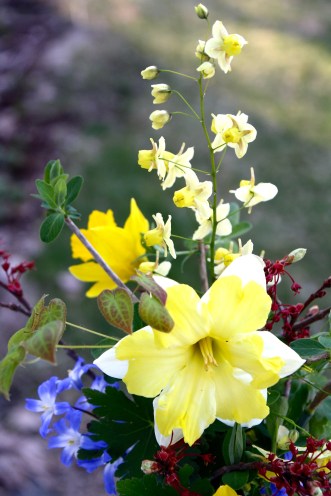 My narcissi are from collections bought long ago, so no ID. The lovely lemon-yellow Butterfly narcissus just opened and the miniature golden trumpet daffodils are always among the first to bloom and last for weeks.
 I was glad to add a few delicate flowers of barrenwort (Epimedium pinnatum), which have jumped into bloom next to the house, while their counterparts further out in gardens have barely emerged from the ground. The bright blue glory-of-the-snow (Chionoxdoxa luciliae) provide a nice contrast.
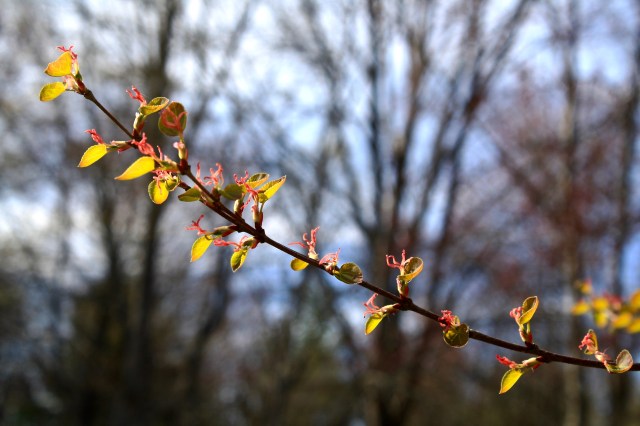
 I was charmed by the tiny, red floral fireworks of the red maples (Acer rubrum) and couldn’t resist adding a few branches. A few sprigs of green honeysuckle leaves (Lonicera tartarica) and some felted, fragrant Geranium macrorhizum leaves are the greens.


 Eliza Waters