

Last week when I spotted a female Monarch (Danaus plexippus) on my coneflower (Echinacea purpurea), my hopes soared that this year we might host a new generation of this imperiled species in our backyard.
Today, I spotted a male and my hopes grew. I wandered over to my milkweed patch (Asclepias syriaca) to check and I found 5 instars. What a thrill! Who would have thought that seeing a caterpillar munching my plants would make me so happy?
While there are several factors leading to the decline of this unique migratory insect, including widespread use of herbicides killing off milkweed host plants, habitat loss and climate change affecting their winter home in Mexico, some scientists believe the major cause lies in the use of neonicotinoids, a systemic pesticide used in commercial agriculture and the nursery trade, which is killing pollinators that visit the flowers of contaminated plants.
It is important for us to put pressure on growers, retailers and politicians to ban the use of systemics in flowering plants, as well as urging the practice of organic methods in home gardens. We must be good stewards if we want a world that works for every species, not just humans.

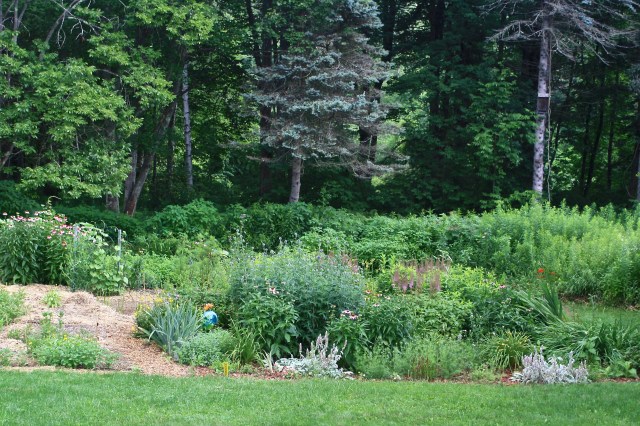
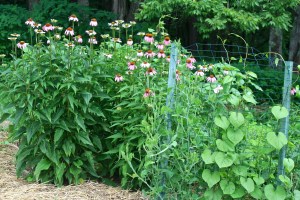 Purple Coneflower (Echinacea purpurea) have started flowering, attracting fritillary butterflies and a single female monarch this week, which was a thrill to see. Hoping for a male to help her procreate. Three varieties of Milkweed (Asclepias tuberosa, incarnata & syriaca) await their progeny elsewhere in the yard.
 The huge clump of Globe Thistle (Echinops ritro) is about to open up for bee business and spires of pink/purple Astilbe taquettii are opening as well. I’ve trimmed some of the Lamb’s Ears (Stachys byzantina) blossoms in front, but as the bees are still visiting, I’m holding off cutting them all down until the Thistle comes into bloom.
 Hemerocallis ‘Happy Returns’ is finishing, as are the Sundrops (Oenothera fruticans). An orange Asiatic lily, forgotten for several years, put in a showing on the left and a solitary Crocosmia ‘Lucifer’ blooms on the right. That side of the bed gets morning shade and between the voles and lack of sun, it isn’t performing well. The corms need to be moved to a sunnier spot, but isn’t high on the endless to-do list.
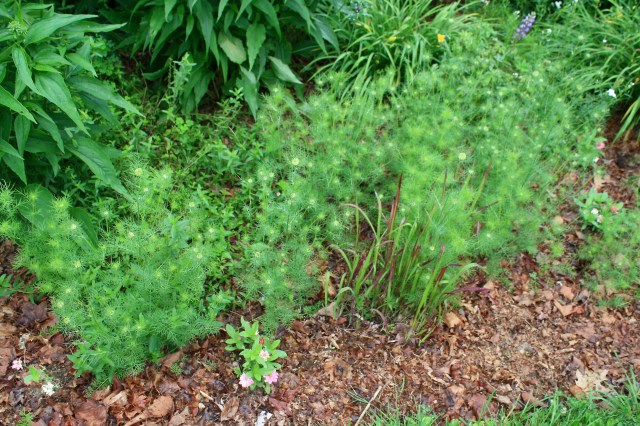 Surrounding the Japanese Blood Grass (Imperata cylindrica) in front, a sea of Love-in-a-mist (Nigella sativa) is ready to open. I’ll try to catch a photo of it at its best, but I’m vacationing next week, so I may miss it, alas. Small Zinnia ‘Double Cherry Profusion’ plants are struggling to gain a foothold against the nightly onslaught of slugs. It’s been a good year for those pests.
 Thanks to Cathy at
  Nothing says mid-summer to me like Beebalm (Monarda didyma) and Gooseneck Loosestrife (Lysimachia clethroides). Both stands are abundant in my yard right now as we settle into July with its hot summer days.
 I’ve added the last of the white foxglove (Digitalis purpurea alba) and a few pink-red daylilies (Hemerocallis no ID). Daisy Fleabane (Erigeron annuus) is a cheerful favorite of mine and a few fronds of Christmas fern (Polystichum acrostichoides) complete the arrangement.
 Thanks to Cathy at
  In A Vase on Monday – Ephemeral

 Daisy Fleabane (Erigeron annuus) is filler and foliage is Baptisia and Patrinia.


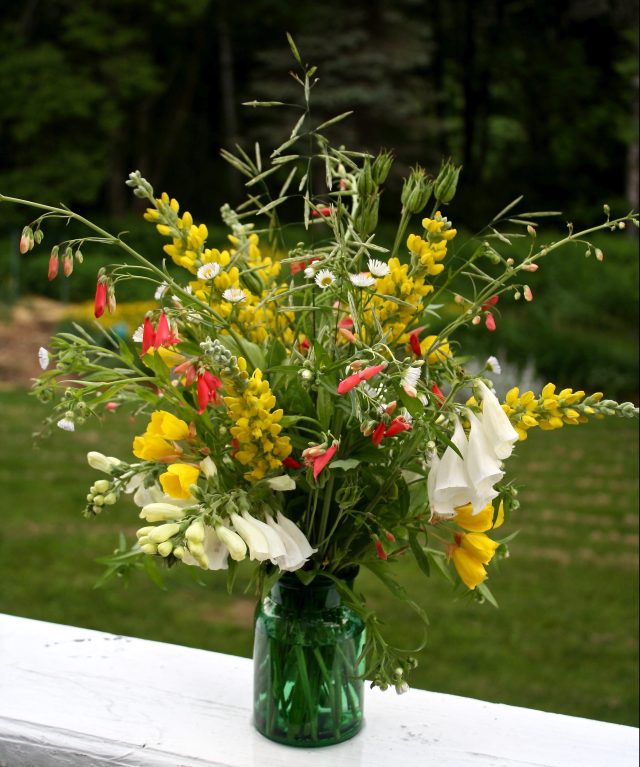
 Yellow seems to be the dominant color in my garden this week with Sundrops (Oenothera fruticosa), Loosestrife (Lysimachia punctata) and Carolina Lupine (Thermopsis villosa) all in peak bloom. I ended up arranging three bouquets and couldn’t decide which one to highlight, so will show all three.


 Eliza Waters