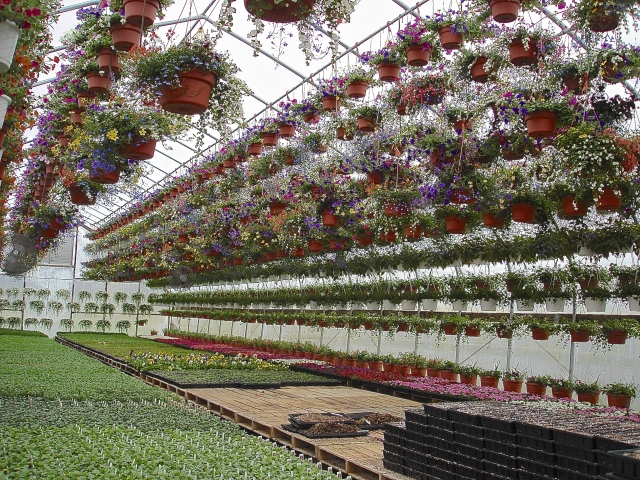
 The locally grown garden plant movement is a return to the way things used to be before big box stores started muscling in on local growers. Using economy of scale, large volume discounts, they out-priced local competition, causing many to go out of business. Those that hung on had to excel, dependent on customer loyalty.
When you purchase a locally grown plant, not only are you supporting someone who lives and spends their earnings locally, you are getting a superior plant. Box store plants have travelled sometimes hundreds of miles, often exposed to extremes of heat, cold and are water-stressed. They rapidly go down hill the longer they sit on hot pavement in a parking lot. Many die and are trashed before they are bought. What a waste! They may have been healthy when they were put on the truck, but after a few days of less than ideal conditions they are a poor bargain indeed.
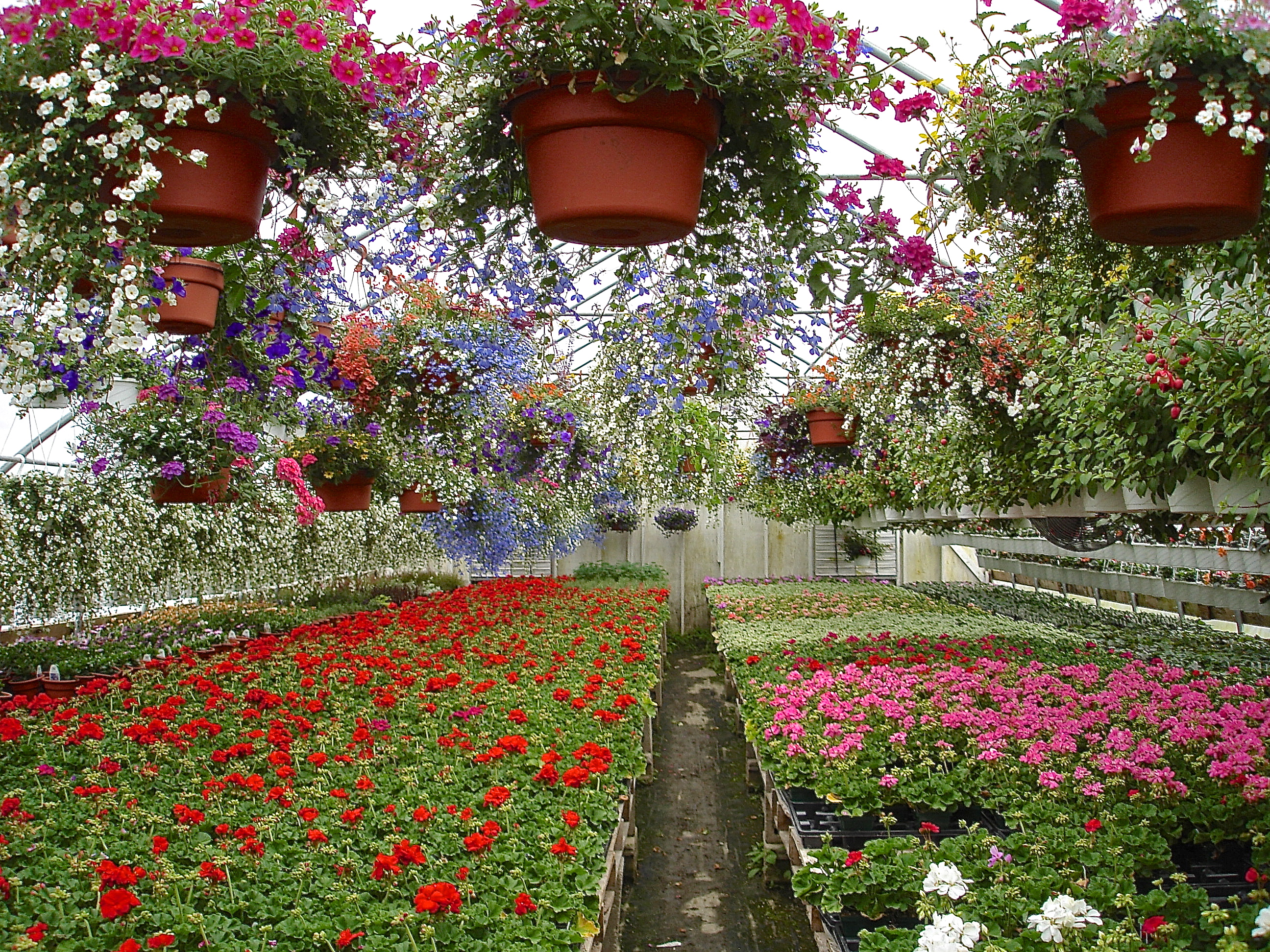
For years I have bought from a local grower that produces an incredible variety of plants that are beyond anything you could ever find at a box store. He offers 6-cell-packs, 4″ pots and hanging pots of individual varieties. But what I most admire are his mixed hanging and patio planters. This grower is an artist when it comes to combining colors and textures. I often gasp when I see them! They are each unique works of art.
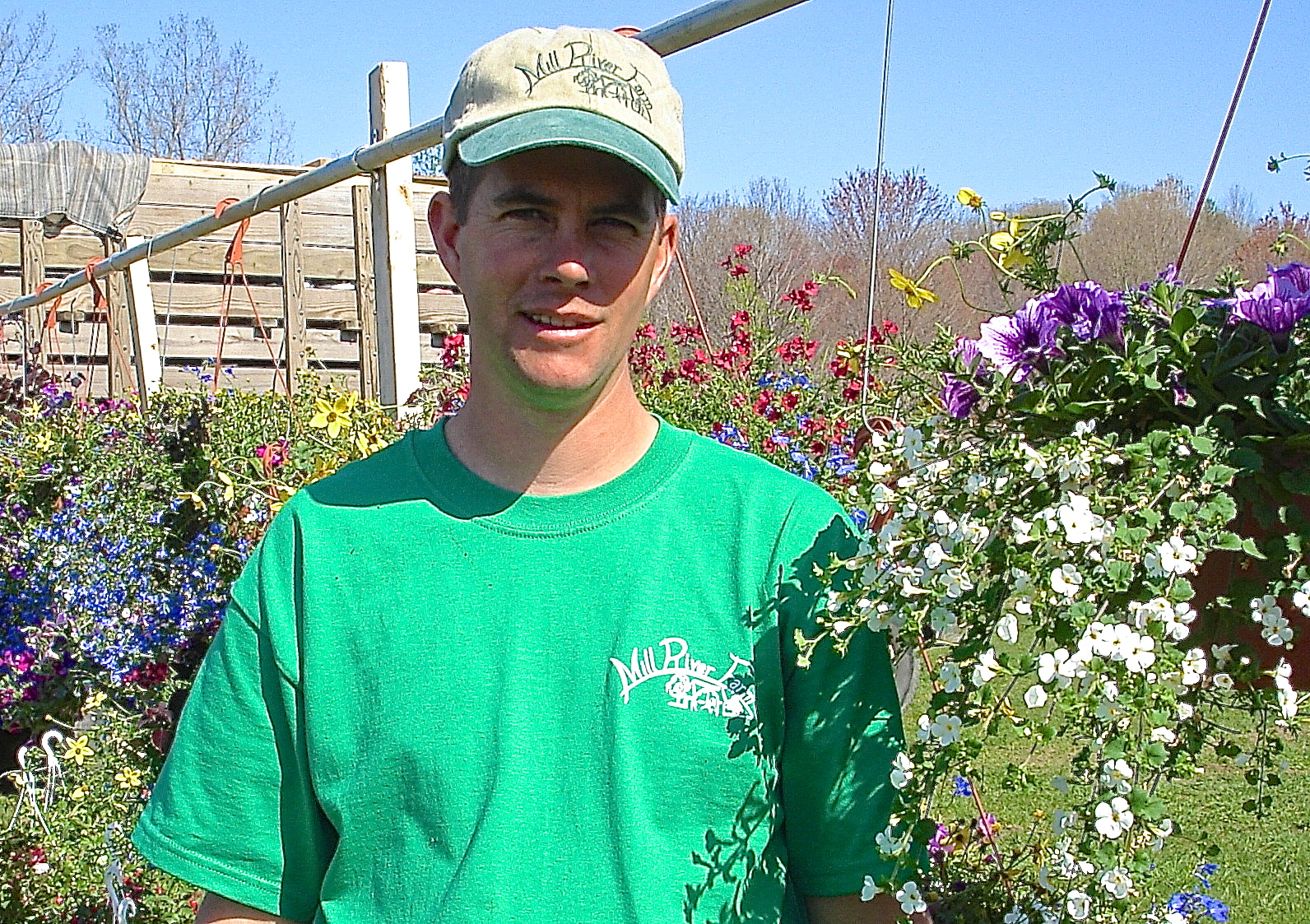
 Meet Brent Young, owner of Mill River Farm, who has become a familiar sight at the junction of Routes 116 and 5&10 in South Deerfield weekends April through June. Known to many simply as “the flower guy” for the past twenty-eight years, he has offered for sale a colorful, traffic-stopping display of flowering annuals, perennials, vegetables and herbs grown in his four greenhouses.

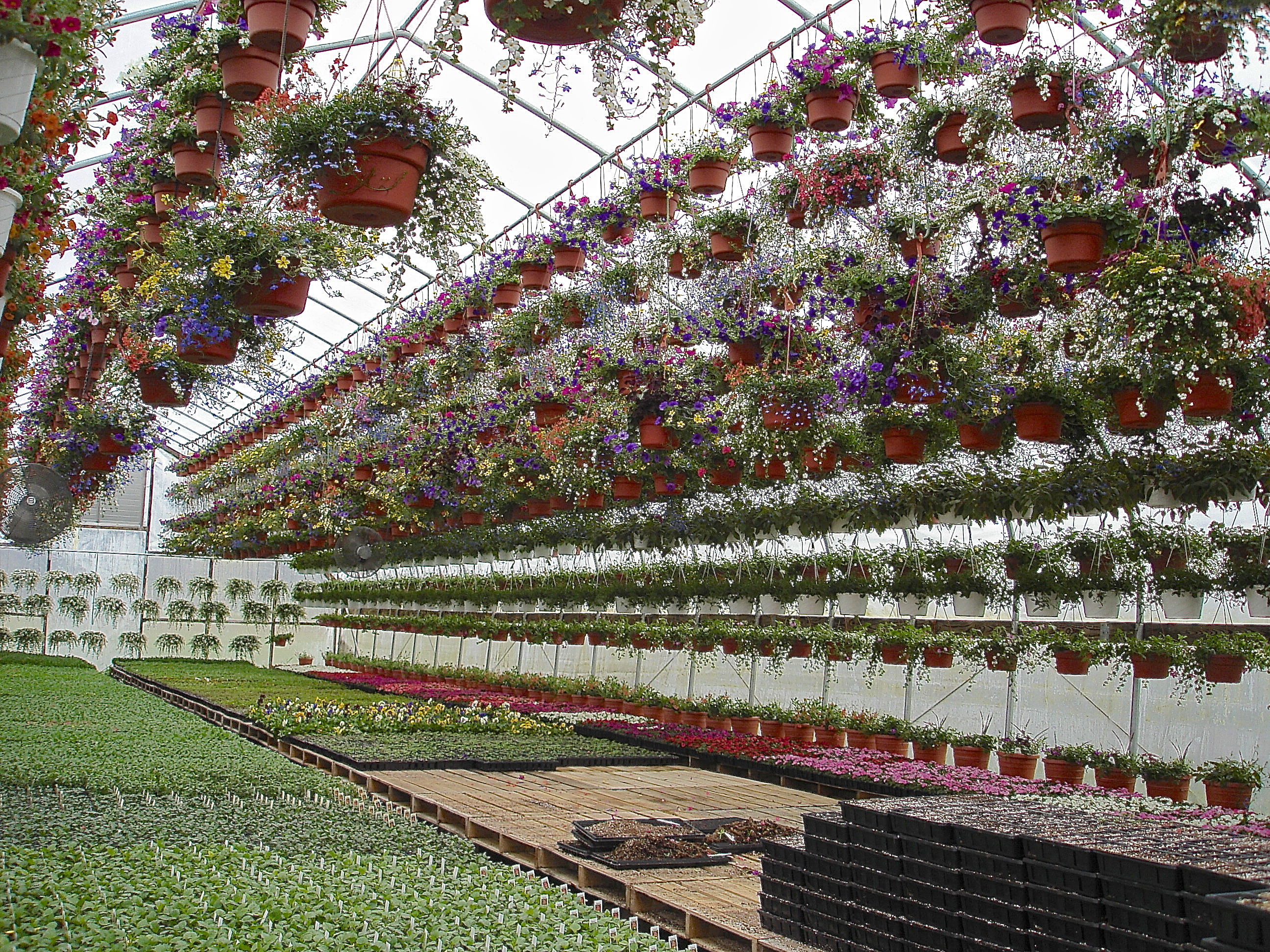
Young, lean and suntanned with a direct, blue-eyed gaze, assiduously works over 100 hours per week transplanting, feeding and watering his plants readying them for market. Young estimates he produces over 15,000 flats, pots, hanging baskets and deck (or patio) containers annually. The latter of these containers, which Young designs and creates as fully-planted mini-gardens, are made with 5-7 varieties of plants artistically arranged into stunning displays; many are one-of-a-kind and dazzling in variety.
The whole process of bringing these creations to market starts the previous July when Young orders seeds, plugs (tiny seedlings started by large commercial growers) and fresh plant cuttings for delivery six to eight months later. “If I waited any longer [than July], all the good stuff would be gone,” Young says.

Largely self-taught, Young started growing produce in a greenhouse behind his mother’s house his junior year of high school. His interest in farming started years earlier, when at ten years old, he recalls helping the late Walter Sodowski, “the Pumpkin Man,” sell pumpkins at the Rt.116/5&10 site. “I used to help haul pumpkins to customers’ cars.” By 1987, his interest had kindled into a passion and Young was selling his own produce. “That first year I probably grew 200 flats and 500 hangers.”
Young purchased Mill River Farm in 1986, but didn’t move his greenhouse operation there until 1996. He estimates that this year he is producing ten times the amount of his first year. “I couldn’t really get any bigger…I wouldn’t have enough time to take care of much more,” Young claims.
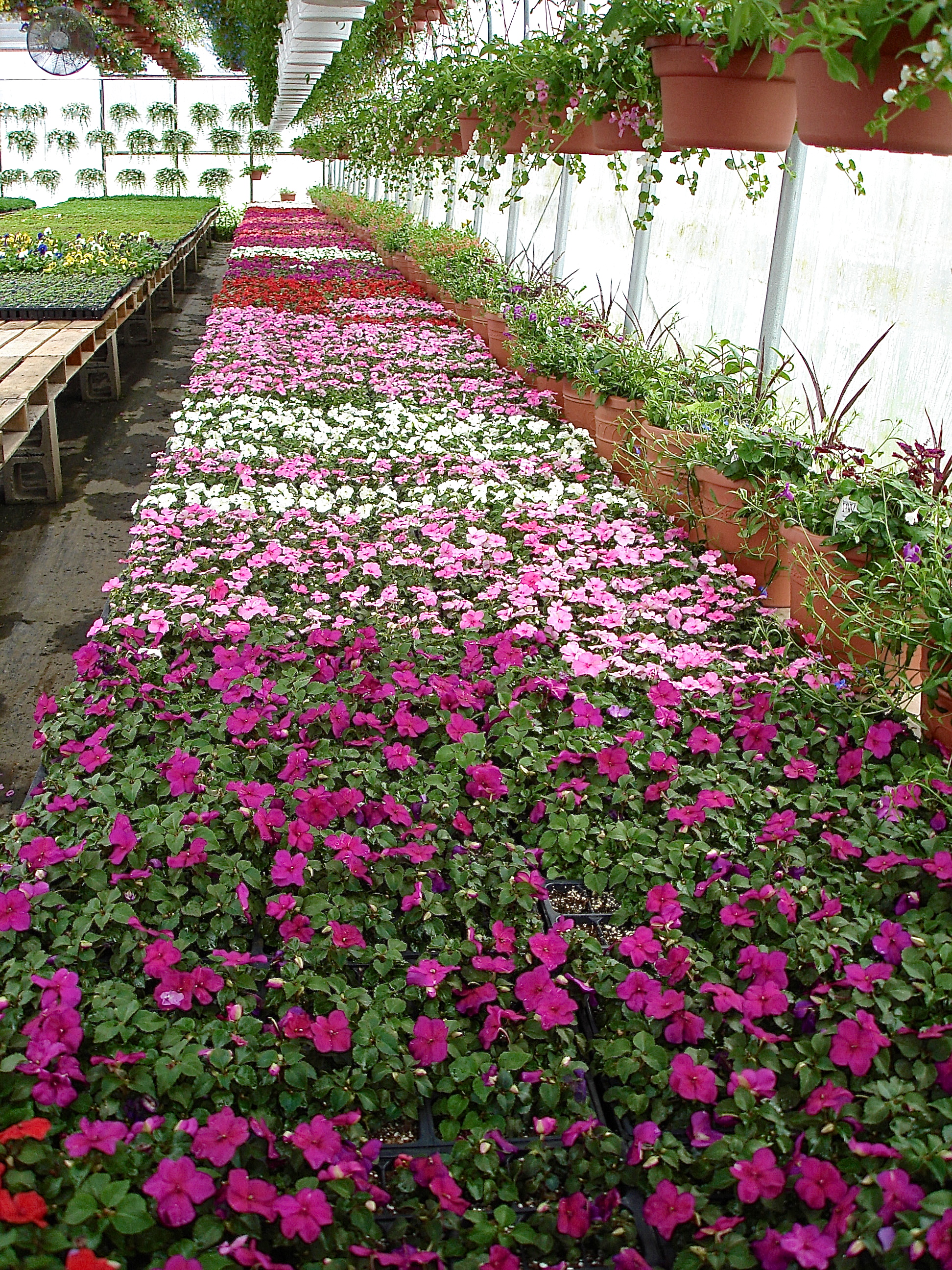
“Mother’s Day weekend, I sleep maybe 4-5 hours the whole weekend,” Young says. “I start watering the greenhouses at 1:00 a.m. (he has four totaling 12,000 square feet of benches and double that amount of space for hanging pots). By 4:00 a.m., I start loading the truck, so that I can be down [to the corner] ready to sell at 8:00 a.m. I start packing up around 6:00 p.m., come back and unload the truck and the process starts all over again. I hate to water at night, but when else can I do it?”
Although he hires part-time help during this busy season, Young says, “I do all the watering myself because I know how much each type of plant needs, how long between waterings…I fertilize every time…that’s why they look as good as they do. I don’t scrimp [on fertilizer] because I want a top-quality plant.”
Young’s first cuttings arrive in early February ready for rooting. At the same time, he also sows his first seeding, repeating every 2-3 weeks through the end of April. Once the young plants have one to two sets of leaves, they are ready for transplanting. He can expertly transplant over 1,200 plants per hour.
 Three-quarters of his trade is wholesale, serving small garden centers and convenience stores in the local area that sell hanging pots and cell packs for the spring planting season. Customers stopping by for milk or bread often impulsively buy one or more of these eye-catching containers. Helen Baker of Baker’s Country Store in Conway says, “They’re beautiful and he delivers small quantities as I need them. Everyone loves them and they sell very well…especially those Martha Washingtons!”

Young also cultivates crops on his 130-acre farm. One hundred acres produce hay, which he bales and sells to horse farms and grain stores. He grows 15 varieties of lavender, 20,000 chrysanthemums from cuttings, three acres of pumpkins, plus gourds, straw (which he makes up into mini-bales with a special baler), and cornstalks for fall decorating. He re-opens his retail stand for September and October.
As his final flourish of the year, you’ll find Young out in the bone-chilling cold, weekends Thanksgiving through Christmas, offering evergreen roping, wreaths, trees and all-natural cemetery box arrangements. Of the long hours and hard work, Young simply shrugs and says, “It’s a labor of love. I love farming. When I see customers’ faces light up, it makes my day.”
Find Mill River Farm on Facebook.


















 Eliza Waters