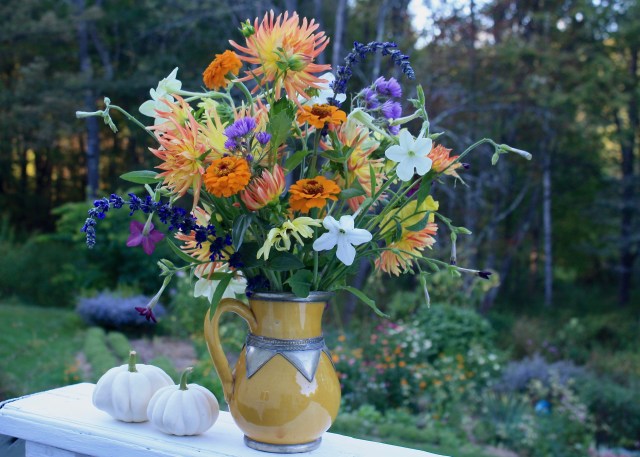
 Dahlia ‘Tiki Torch’ is the fiery star of this week’s IAVOM, along with Sunflowers (Helianthus annuus ‘Italian White’) and golden orange Zinnia elegans ‘Sprite.’
A self-sown, white Flowering Tobacco (Nicotiana alata) that popped up beside the driveway near the house, has the largest blossoms I’ve ever seen, nearly double the others in the garden. A purple bloom also included (lower left side) gives you scale. Not sure if it was nature or nurture, but I will save some seed in case it is a new hybrid. It’s has especially fragrant blossoms.


Salvia ‘Magic Wand’ and purple New England Asters (Symphyotrichum novae-angliae) add contrast. The white gourds were a compost pile surprise and I think they are a hybrid, too, from the seed of gourds I purchased last fall. That shape is usually mottled green or gold– when I searched online, I couldn’t find anything like it. Marvels of nature.
The pitcher is Moroccan terra-cotta with silver trim. A handsome piece I fell in love with, but tends to seep, so needs a saucer beneath it.


You’re probably tired of seeing my Dahlia ‘Voodoo’ but I can’t get over its velvety beauty. We had a good soaking rain on Saturday that broke quite a few stems, so I plonked the salvaged lot into my mother’s grape-motif, burgundy glass vase.
 Lastly, just because my Sweet Peas (Lathyrus odoratus ‘Royal Mixed’) are still blooming (amazingly non-stop all summer), I’ll share my kitty-in-the-flowerbed pocket vase filled with them. Such fragrance!
Thanks to Cathy at Rambling In the Garden, who hosts a weekly meme to showcase arrangements created from our gardens. Wander over to see what gardeners all over the world are arranging this week.
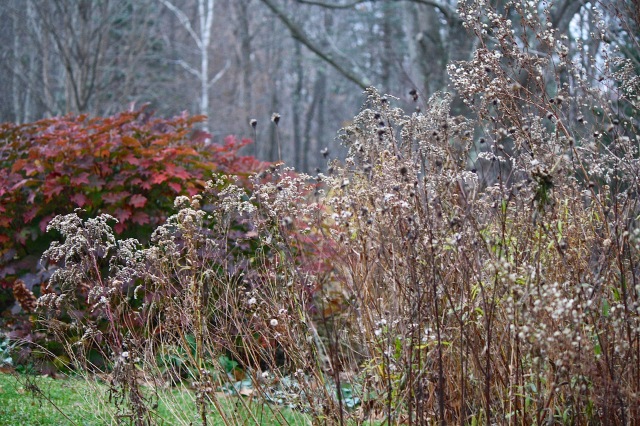 Gardening for wildlife involves embracing a messy garden– chewed leaves, piles of brush, reeds left standing through the winter. But the benefits are many– birds eating unwanted insects and butterflies flitting about, bees buzzing and pollinating your fruits and vegetables. Not to mention the gift of seeing every day the beauty that is inherent in dormancy.






 Autumn is officially here in the northern hemisphere, so I’ve chosen to celebrate the season for this week’s IAVOM. Featuring another of my Artesa pocket vases, this one sports two looks, cobalt and turquoise, along with a small sugar pumpkin prop (which may or may not be eaten in a few weeks).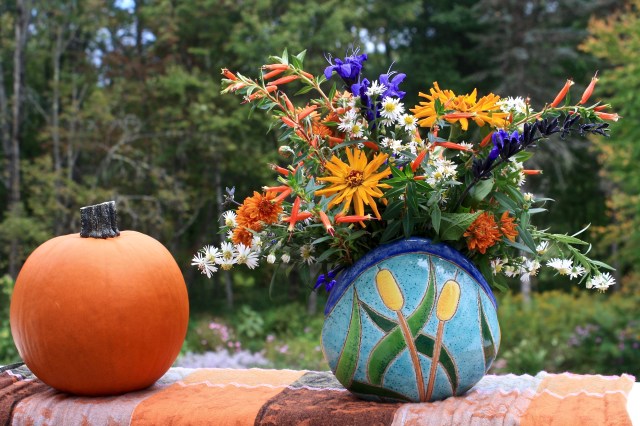


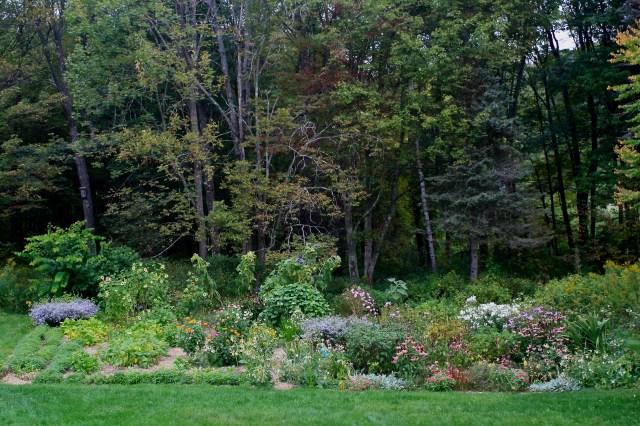

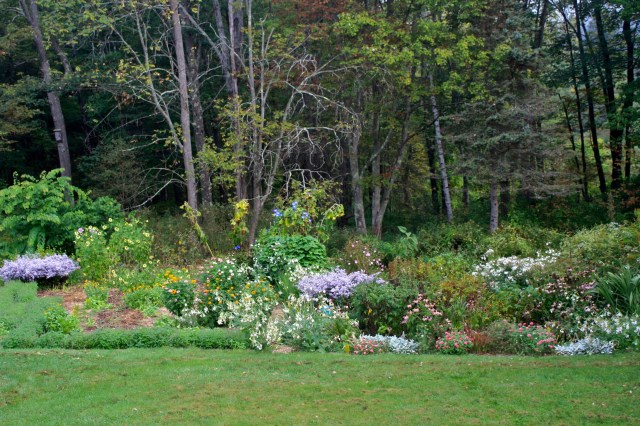
 Far left, Holy Basil (Ocimum tenuiflorum) is on its third harvest, I hope with one to go before frost, and Orca beans (Phaseolus vulgaris), soon will be picked for drying.
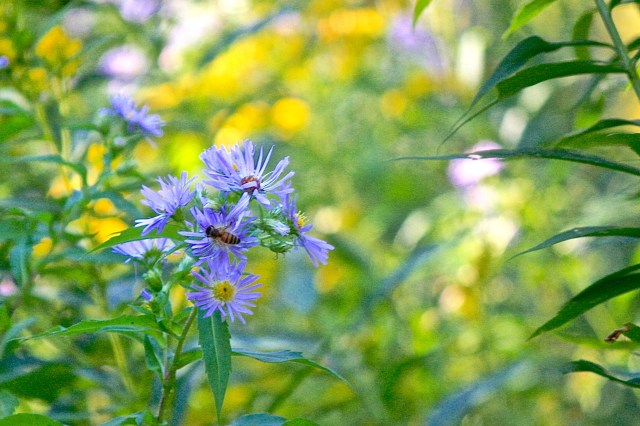
 Two mounds of purple Heart-leaved Asters (Symphyotrichum cordifolium), far left rear and in the middle, have been a delight. I pruned them back in June, which has resulted in denser, less floppy stems. Purple coneflower (Echinacea purpurea) has faded to mauve, its prickly heads full of seeds. I need to deadhead them soon before they self-sow all over. I leave the cut heads in the field for the birds. If they self-sow there, all the better. White and pink Phlox paniculata are about done.
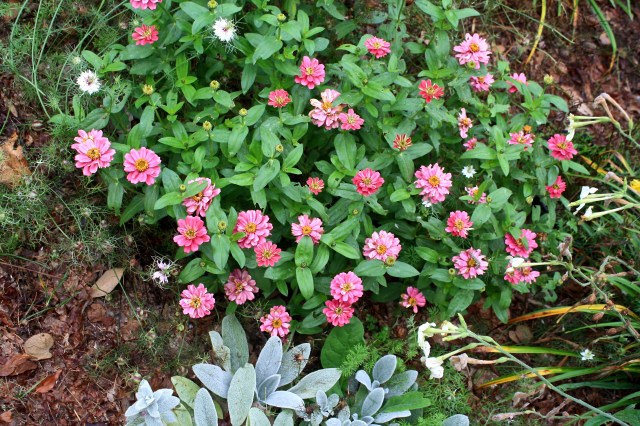
 Along the front, Lamb’s Ears (Stachys byzantina), a few hot pink Zinnia angustifolia x elegans ‘Double Cherry Profusion,’ Japanese Blood Grass (Imperata cylindrica) surrounded by Love-in-a-Mist (Nigella damascena) seed heads and a few more clumps of white Nicotiana at the end.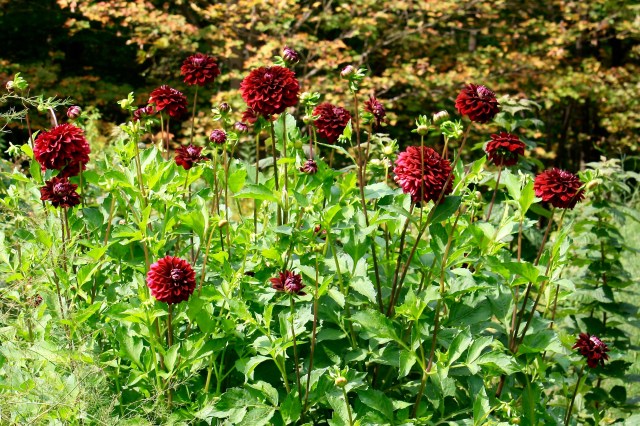
 This week my sister sent me a fluted Lenox glass vase in the most beautiful shade of amethyst. I’ve filled it in complimentary colors with the tallest flowers I currently have blooming.


 These caterpillars seem to be everywhere at this time of year. While they are not poisonous, they can cause a stinging rash. Best to look, not touch!


 Eliza Waters