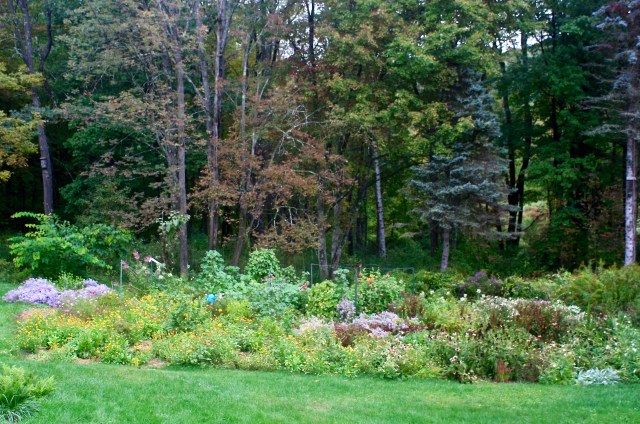
October 4, 2016
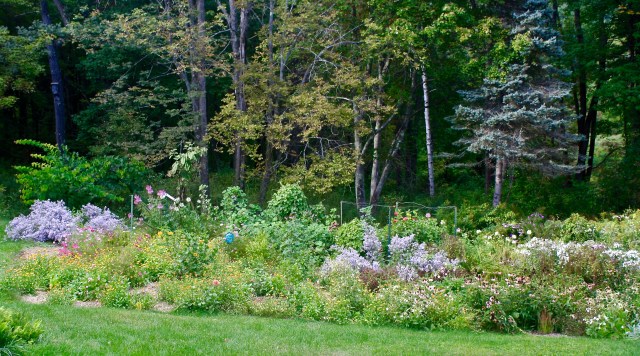
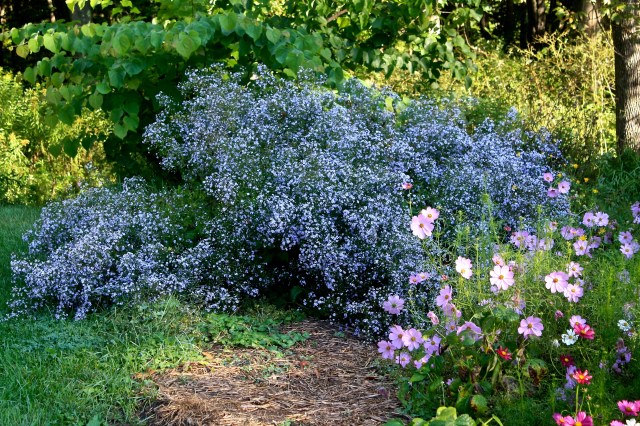
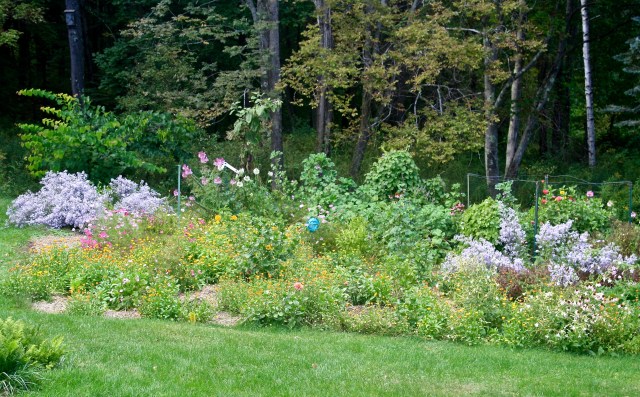
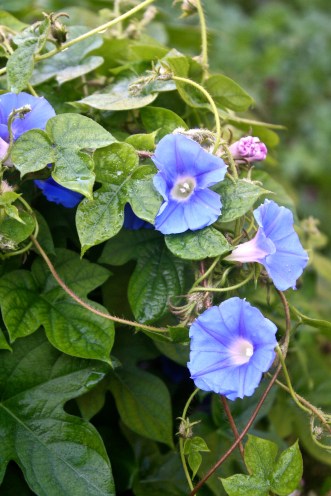
The trees have begun to turn in earnest, all the way to the sumac at the river you see through the window in the forest. The blue-violet, heart-leaved asters (Symphyotrichum cordifolium), have flopped a bit from the drizzly rain we had over the weekend, but they are still going strong.
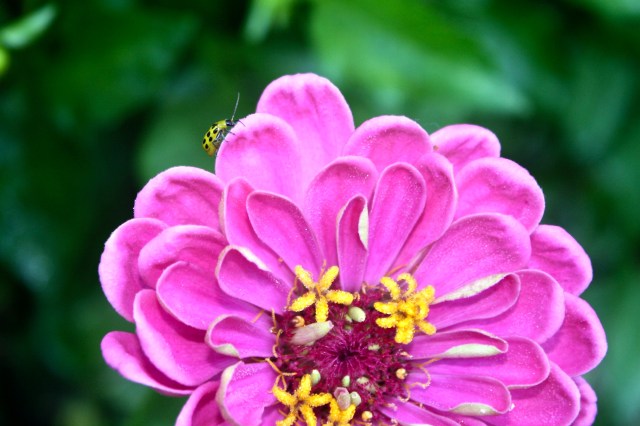
The cleome (C. hassleriana) are fizzling out in the cooler temperatures, but the white, dark and light pink cosmos (C. bipinnatus ‘Sensation Mix’), continue on, along with the orange and yellow calendulas. The few zinnias (Z. elegans ‘County Fair Mix’) in the patch with the dahlias are still sending up new blooms.
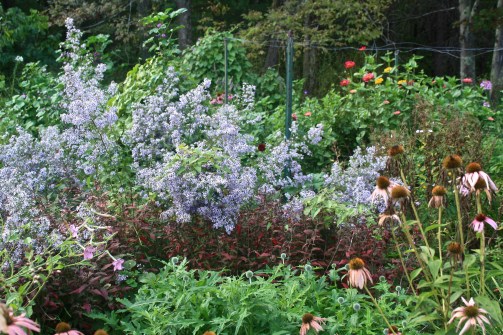 I need to start chopping things back, but the weather has not been conducive to garden work.
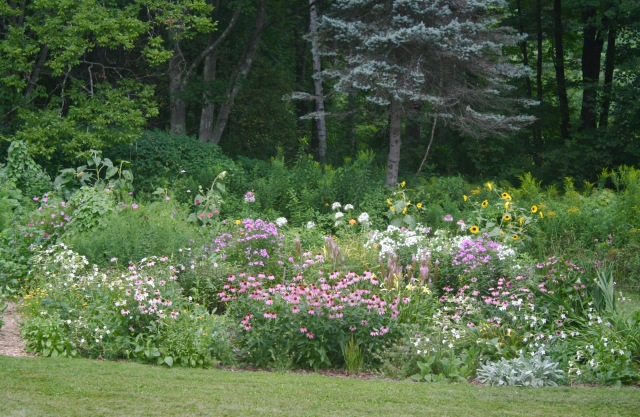
In the foreground of this photo, the globe thistle (Echinops ritro) that I cut to the ground after blooming, has regenerated with new flower buds, but I wonder if they will have a chance to bloom before the deep cold sets in? Time will tell. Behind it, sandwiched between the aster, is the beautiful red foliage of sundrops (Oenothera fruticosa).
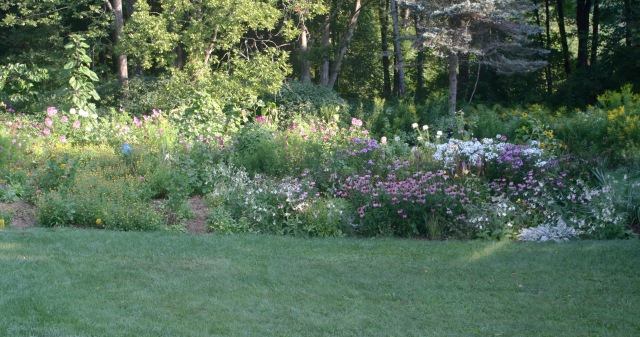
 The coneflower (Echinacea purpurea) seed heads are being visited by birds, mostly finches and sparrows. In front of them, the blood grass (Imperata cylindrica ‘Red Baron’), which was not noticeable all summer, now is blazing. Directly behind it, in the far back almost into the woods, a purple New England Aster (Symphyotrichum novae-angliae) can be seen (best in the third photo). It was too tall for the border, so I banished it to the wood edge where it seems quite happy.
The astilbe seed heads are rusty brown and the white flowering tobacco (Nicotiana alata) bloom along the front with the mound of silvery lamb’s ears (Stachys byzantina).
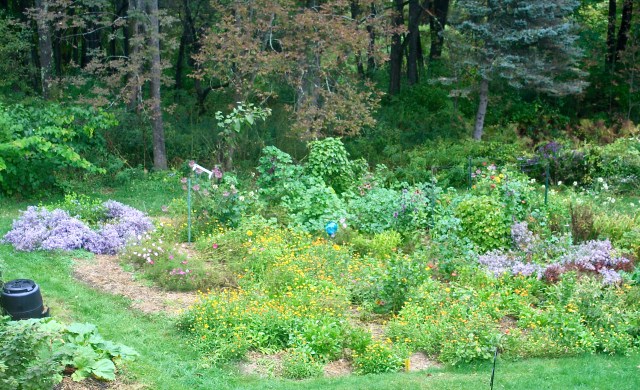 I’m linking with Cathy at Words and Herbs, joining participants taking weekly photos of the same garden over the course of the growing season to note its evolution.
Below are some of the previous views for comparison:

April 1, 2016

June 28, 2016
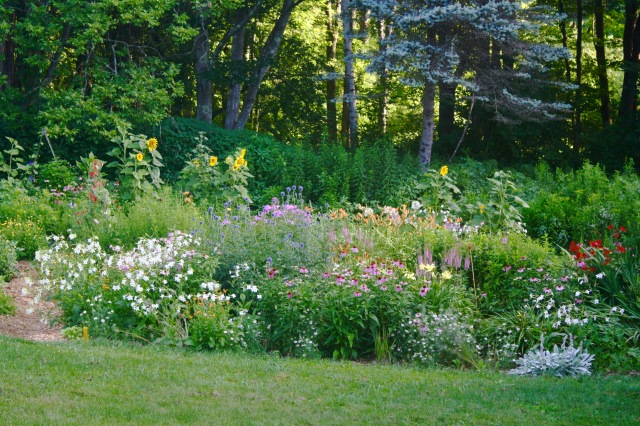
July 26, 2016
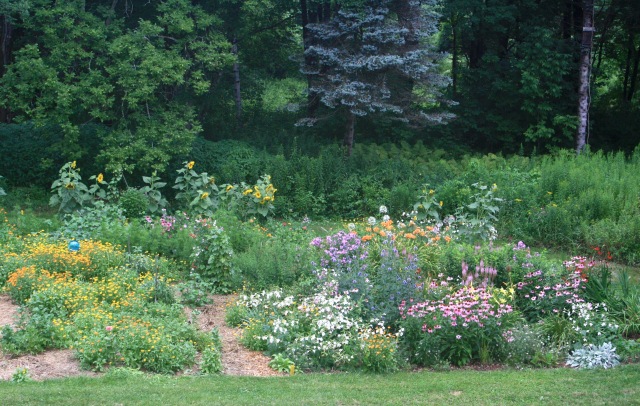
August 2, 2016
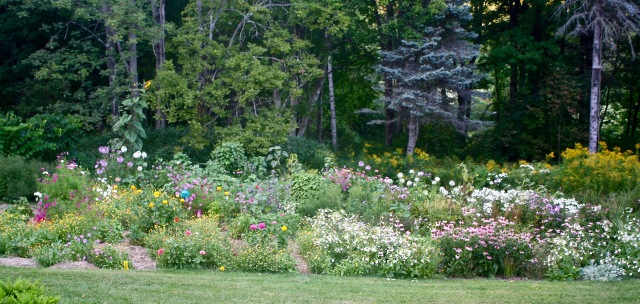
September 6, 2016
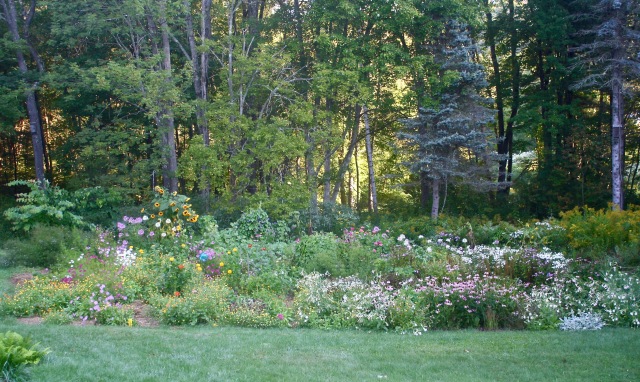
September 13, 2016

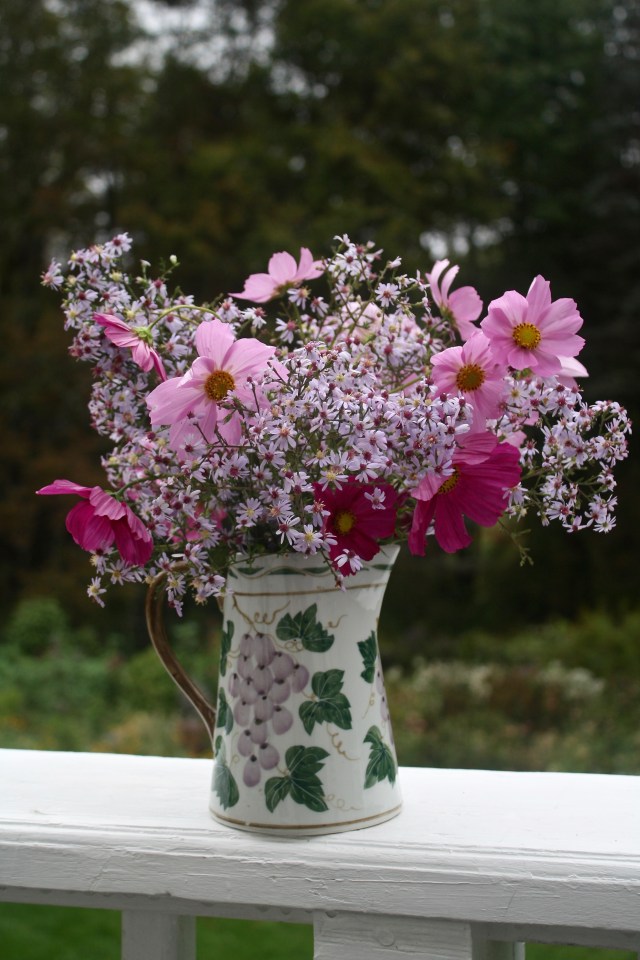 I usually like to take my time creating my arrangements, as I derive great pleasure from it, but this week I didn’t have the time, so here is my first ‘plonk’ for IAVOM.
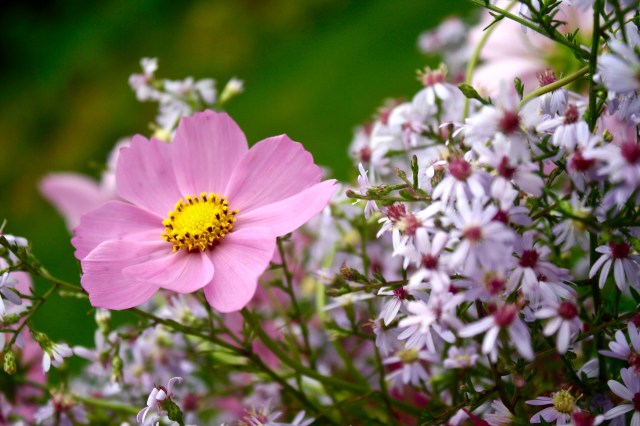 Of course, I had to use the heart-leaved aster (Symphyotrichum cordifolium) I’ve been raving about, to which I added dark and light pink cosmos (C. bipinnatus ‘Sensation Mix’).
 The grape motif on the pitcher (another great thrift store find) is a nod to autumn and the harvest.

 Once a week, as members of


 Since a frost was predicted for Sunday night, we covered a few things, my spouse made a support to hold a tarp to cover the largest zinnia and dahlia patch (see D. ‘Voodoo’ below), and I picked nearly every tender flower in the garden to put in
 It turned out to be a light frost, so we might have a few more weeks of purple, pink and white cleome (C. hassleriana), white, dark and light pink cosmos (C. bipinnatus ‘Sensation Mix’), zebra mallow (Malva sylvestris ‘Zebrina’) and a few zinnias (Z. elegans ‘County Fair Mix’), as I picked nearly every bud that held promise.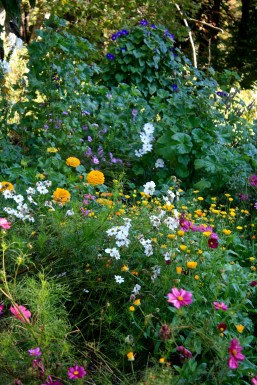

 A cold front swept through Friday night and temperatures plummeted within a few hours from summer to autumn. With frost warnings for Sunday night, I was scrambling Sunday afternoon to pick my tender annuals for vases in the house, three of which I’ll share here.

 My orange Blenko vase (a gift from my sister) was pressed into service for an arrangement of orange zinnias (Z. ‘Apricot Profusion’), black-eyed-Susan (Rudbeckia hirta), speedwell (Veronica spicata) and tall white aster (Symphyotrichum lanceolatum).


 Eliza Waters