Today’s Quote

This is beyond sweet, I just had to reblog it!

Posted in Inspirational Quotes | 4 Comments

May Days

ImageFinally, we have had a string of warm, sunny days so I do believe spring is really here. This has been the longest delayed spring weather for many years.

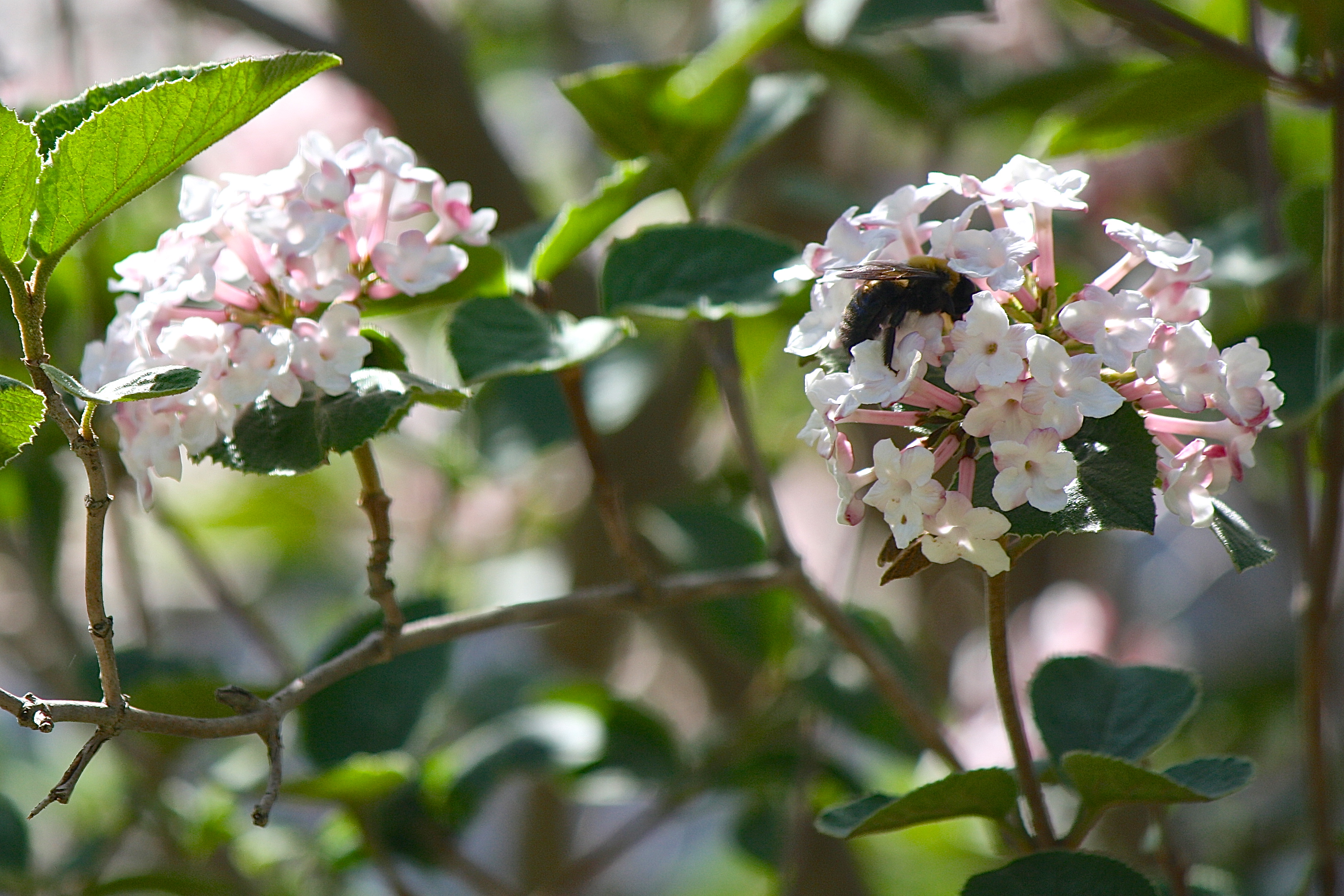
May has always been my favorite month. It is when the grass turns a lush green, the trees leaf out in lime and chartreuse and shrubs bloom gloriously and profusely. Our Korean Spice Viburnum (V. carlesii) is perfuming our yard right now and I am in heaven! It is definitely one of my favorite shrubs for that reason.

Everyone loves Korean Spice Bush (Viburnum carlesii)

Everyone loves Korean Spice Bush (Viburnum carlesii)

The ruby-throated hummingbirds love it as well. I saw my first hummer on the 10th, right on schedule! Already we have a courting pair. I love watching the male’s courting U-shaped flight – trying to impress the object of his devotion by flashing his gorgeous ruby throat patch. Poor guy, she always seems a bit bored!

The hardest part of living in a cold climate is that for so much of the year we are cut off from the outdoors. Now, the warmer weather allows the windows to be open and the house is refreshed with wafting breezes.  From inside, I can hear the birds singing and to the west side,  the waterfall, cascading over the stones – the myriad of falls create a white noise as background to birdsong.

Musical accompaniment

Musical accompaniment

IMG_9187

Oh and the birds! With the arrival of each new migrant, I rejoice! I send them a greeting of thanksgiving for their safe return, may they (and seven generations) be fruitful here.  May is peak warbler migration, my favorite of songbirds. Common yellowthroat, chestnut-sided, black-throated blue, yellow, black and white and I’m sure one or two others that I haven’t acknowledged yet, have serenaded my walks these past few days. Click the links to hear their songs – ethereal!

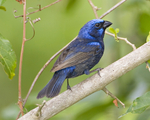
This morning I spied three pairs of rose-breasted grosbeaks and a spectacular indigo bunting, its beautiful blue plumage like a piece of sky fallen to rest in the tree tops.

Indigo Bunting  (Rob Curtis/VIREO Nat'l Audubon Society)

Indigo Bunting
(Rob Curtis/VIREO Nat’l Audubon Society)

A song sparrow and a pair of cardinals have marked territories out front, I suspect nest sites are located in the front hedge and Alberta spruce. A male chickadee taps the windows periodically all day long. My guess is he sees his reflection and thinks it is another rival male – I suspect this type of behavior is where the comment about poor reasoning, “bird-brain,” came from.

I sit outside as much as I can and we have our meals on the deck off the kitchen. In the warmer weather I consider it a sin to be inside, so either for work or leisure, this is where I am. The front porch is covered, so even if it rains, I can be out in the fresh air. Currently, the goldfinches are twittering away, crows call in the distance, chickadees call “phee-bee” to one another, while a peewee voices its raspy name and a Carolina wren repeats over and over at the edge of the woods. Deeper within I hear the haunting, melodious notes of a veery.

The toads have started trilling their mating calls down at the river.

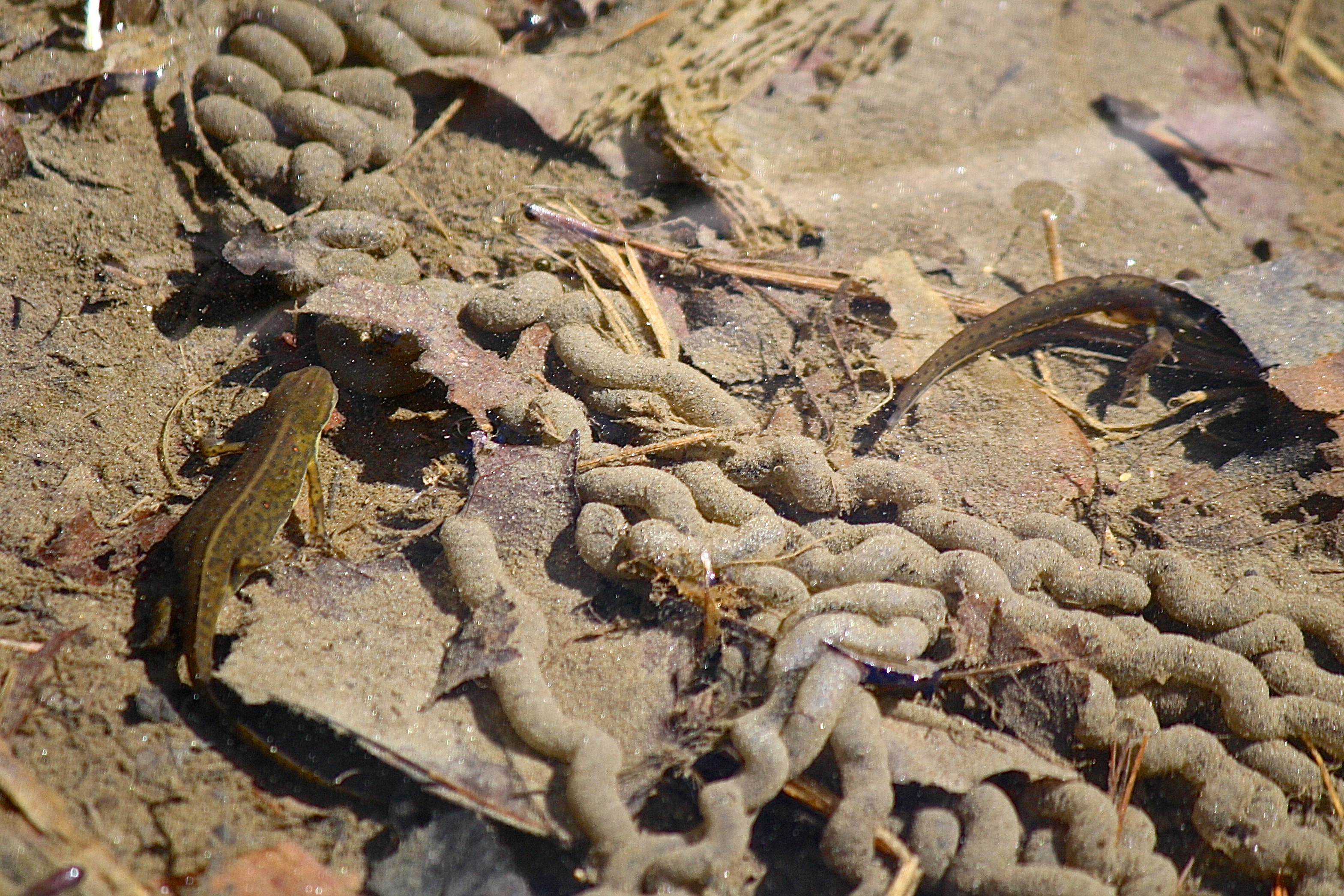
Mr. & Ms. Toad are ‘en flagrante delicto’ with productive results: lots of eggs

They often will lay their long strings of noodle-like eggs in shallow pools that are doomed to dry up before the tadpoles can mature. When able, I try to move them to deeper pools. The ones I miss feed the raccoons and other predators.

Adult red-spotted efts considering lunch options at the toad egg buffet

Adult red-spotted efts considering lunch options at the toad egg buffet

The mortality rate of young animals in nature astounds me. I guess most species lower on the food chain compensate by creating abundantly. Like plants that create thousands of seeds, insects and amphibians lay hundreds, if not thousands, of eggs. Reasoning that everything sooner or later becomes food helps me feel less badly about their early demise. In reality, it is simply a transfer of energy; the tadpole becomes part of the crow or raccoon in the ‘great circle of life.’ I am honored to bear witness to it all, a privilege in so many ways.

Posted in Country Living, Field Notes, My Photos | Tagged , , , , , , , , , , , , , | 29 Comments

Hello There, Blue Eyes!

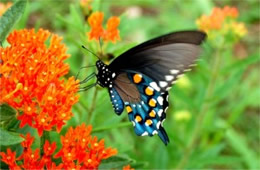
IMG_9147This sweet little butterfly quietly posed for me on a blossom of Narcissus ‘Ice Follies’ and though I searched online to find out what kind she was, I wasn’t successful. My guess is she’s a type of Azure Butterfly. Are there any lepidopterists out there who can identify her?

IMG_9141 - Version 2

Butterflies symbolize transformation. My visitor heralds the renewal of spring here on our seven and a half acres. What a beautiful blessing!

Posted in Country Gardening, Field Notes, My Photos | Tagged , , , , , , | 27 Comments

A popular garden trend is planting to attract hummingbirds and butterflies. Both are drawn to nectar-rich flowers, adding activity, sound and beauty to your garden.

In early May, I know hummingbirds have returned when they visit my quince bushes. Right now my quince hedge is fully budded and the blossoms will open soon, just in time for my summer visitors. Their arrival is a happy day for me! Providing a sequence of bloom all spring, summer and into autumn assures these visitors will find my yard a welcoming habitat. Hanging baskets of annuals like fuchsia, petunia, thunbergia and million-bells (Calibrachoa) in bright red, orange or pink are highly attractive. Tubular flowers like agastache, penstemon, crocosmia, monarda, kniphofia, salvia and lobelia are magnets to hummingbirds.

Many people use hummingbird feeders to supplement flowers, however, sugar water not only attracts hornets and flies, it lacks the vitamins and minerals found in flower nectar. If you do keep a feeder, be sure to clean it weekly to avoid potentially harmful mold and bacteria that can adversely affect hummingbirds.

Image

Monarda didyma – Bee Balm

Butterflies love many of the same flowers as hummingbirds, however, choosing native plants that they are naturally adapted to provides food for both larvae and adults. Learn to identify the larvae of your favorite butterflies so that they are not mistaken for pests. Realizing that you are planting a garden with plants that are intended to be riddled with holes seems contrary, but if you want to successfully attract butterflies, provide for the entire life cycle.

Monarch instar larva on Milkweed

Monarch instar larva on Milkweed (www.edupic.net)

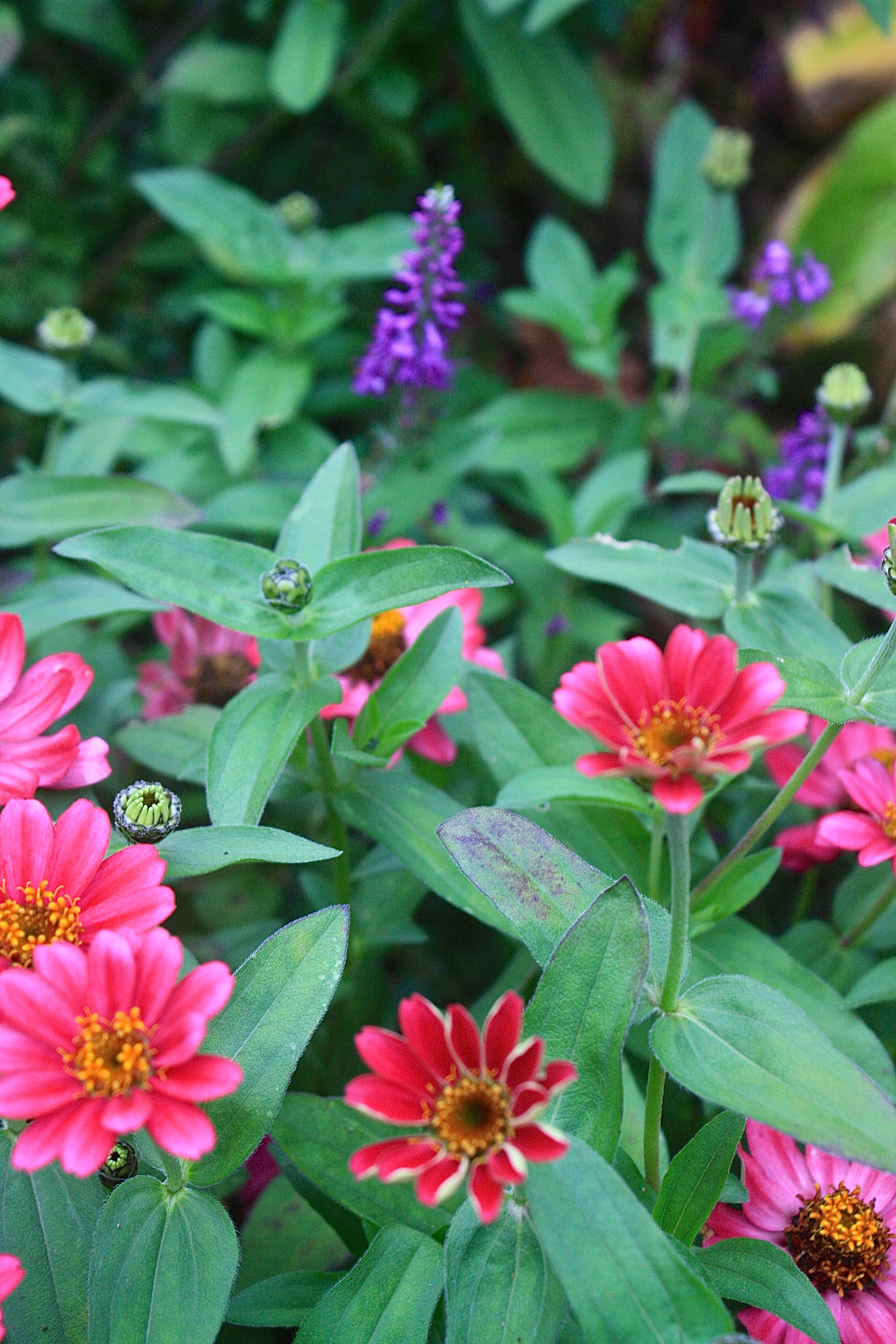
Some plants, such as milkweed and joe-pye-weed, are used by both larvae and adults, while others provide nectar for the adult butterflies that we love to see flitting about our gardens. Coneflower, gaillardia, phlox, goldenrod, liatris, New England aster, sedum and black-eyed Susan are highly favored perennials. Trumpet vine and honeysuckle are popular vines. Azalea, lilac and blueberry are good shrub choices. Zinnia, lantana, verbena and impatiens are frequently visited annuals.

Image

Zinnias

Situate larval food plants toward the back of your border or in a spot where their chewed leaves won’t bother you. Train yourself to cheer their tattered appearance! Refrain from using pesticides anywhere in your yard. Plan for a succession of bloom all season long to attract the maximum number of species. Click this website link for information and photos to help identify butterfly and moth species, their ideal habitat, favorite flowers and larval host plants.

Attracting winged creatures to your garden adds color, vitality and greater enjoyment for you in your garden, while simultaneously ensuring the survival of our winged friends.

Image

Swallowtail Butterfly on Milkweed (http://www.edupic.net/lifecycle.htm)


Posted on by Eliza Waters | 24 Comments

Lovely Message By Dalai Lama.

I love this! It is a good thought to keep in mind.

Read it Loud's avatarA Small Act Of Kindness Can Bring Smile On Million Faces

image

View original post

Posted in Inspirational Quotes | 10 Comments

Spring Chores

Katsura blossoms

Katsura (Cercidiphyllum japonicum) blossoms

Like many of you, spring has called me to do other things, mostly yard work. Initially, I tried to keep my pace on WordPress, but soon realized it was impossible, unless I wanted to forfeit sleep. (Not a good option!)

I’ve been trimming back perennials, raking gardens, clearing trails, pruning and transplanting. Happily, my spouse has been working along side of me, so it feels like we accomplish a lot in a short amount of time.

We suffered a fair amount of vole damage this year, girdling the bark from many bushes and young trees (which frustrates me no end). With the bitter cold weather, there was dieback to trim from some of the more tender hollies and azaleas. I try to tackle a few things every day, but I am not as driven as I used to be. Lots of things won’t get done, so I have to make peace with that.

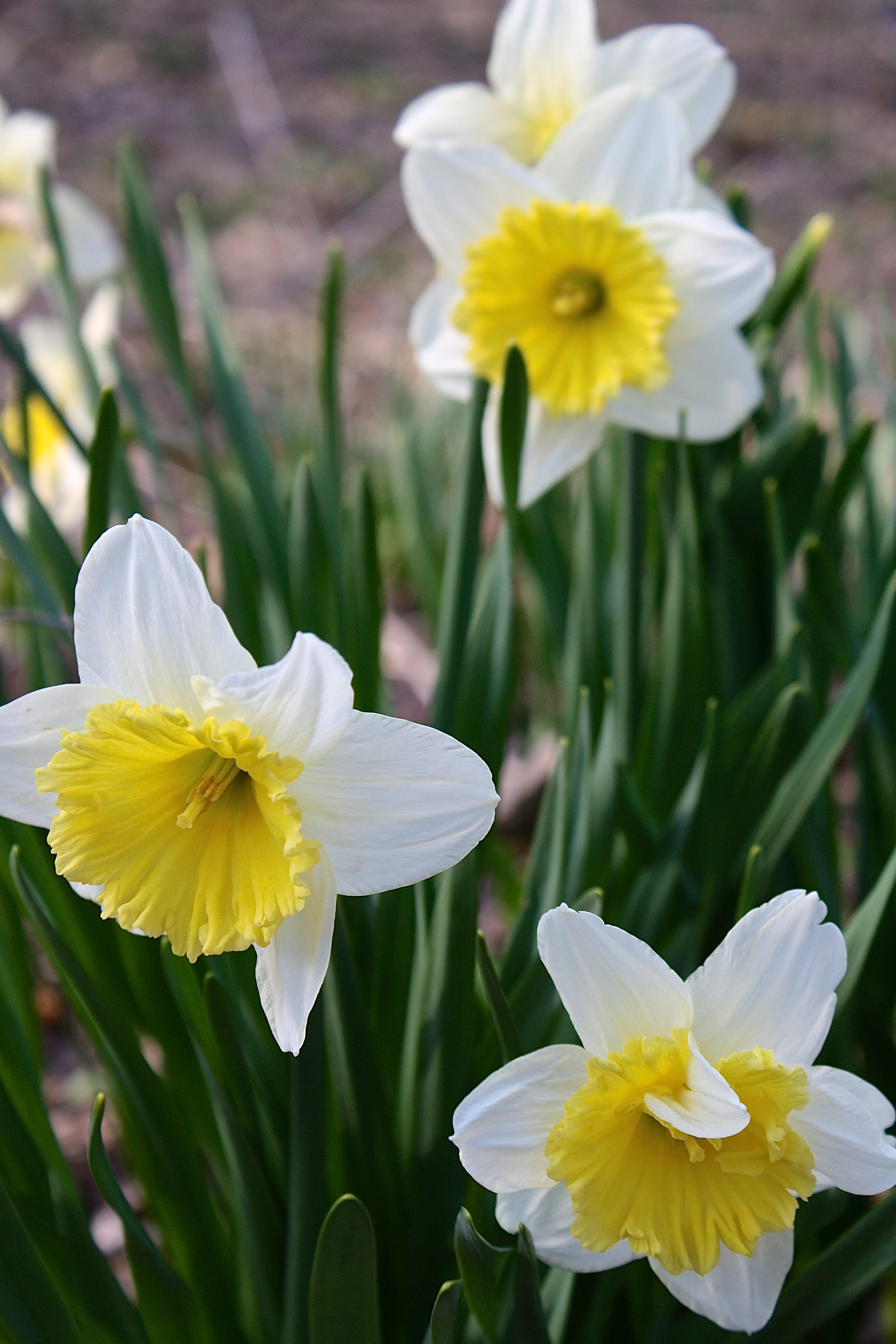
Daffodils - Narcissus 'Ice Follies'

Daffodils – Narcissus ‘Ice Follies’

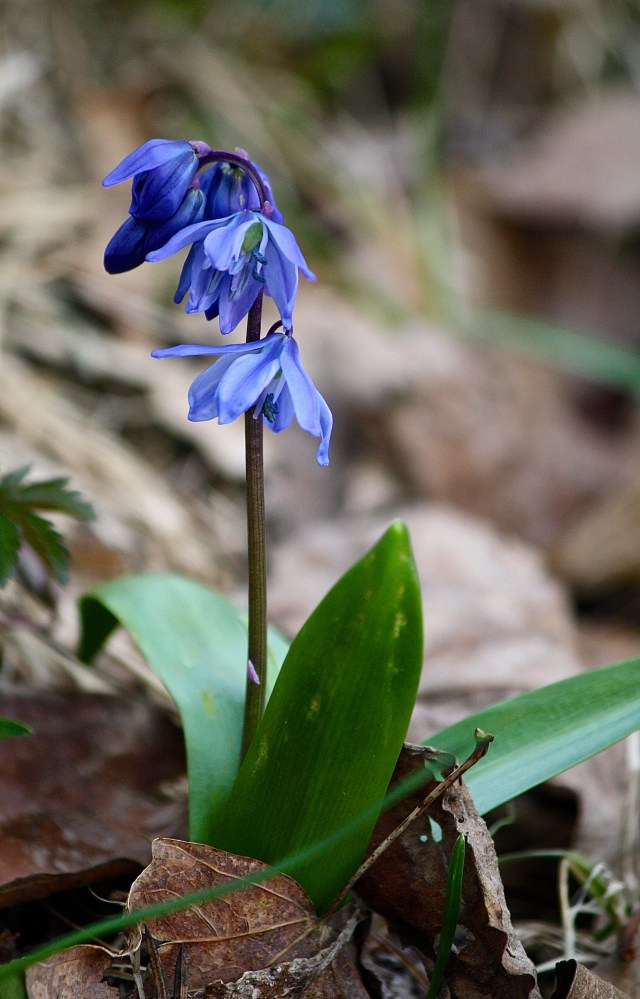
I am happy that the daffodils are blooming and tulips are budding. The lawn is dotted in blue and white from naturalized puschkinia, chionodoxa and scilla. Soon it will be awash in a heavenly sea of white and purple violets, which hold a special place in my heart.

I’ve had a hard time this year adjusting to the reality that ticks are now everywhere I go, be it yard, garden, woods or field, and every bite brings the threat of Lyme disease. I, and two members of my family, were diagnosed with it last summer and I know now what an awful thing it is. Trying to put a positive spin on it is particularly challenging given how much time I spend outside. I feel I’ve been robbed of the carefree joy and bliss of gardening – something I really love. Acceptance is slow in coming, but I won’t stay inside hiding. I take precautions and try to stay alert. I’m not going down without a fight! Perhaps I’ll get a flock of guinea hens, which apparently eat ticks. To me, they look silly, like comical cartoon characters. If I do, I’ll have to figure out how to keep them from being eaten by predators, like coyotes and foxes. Sometimes, life can be so complicated!
We have had a wild hen turkey visiting our feeders recently. I wonder if she eats ticks?

Wild American Turkey

Wild American Turkey

She weighs at least twenty pounds, is quite healthy with beautiful plumage. Obviously, she found enough to eat all winter, but I wonder why she is alone? It is mating season and hopefully she will find a handsome tom and lay a nice clutch of eggs. In summer, I often see two or three hens foraging together with their broods in tow, like gangly teenagers, gleaning weed seeds and insects from the gardens and fields. They are entertaining to watch, very alert and good at escaping danger, dispersing at the first sign of threat in a burst of wings.

IMG_8973

And for those who read my posts on Froggy Love, the results have hatched and now the pond has tiny tadpoles. The amorous adult Wood Frogs have returned to forage in the leaf litter.

IMG_8975

Wood Frog Eggs & Tadpoles

They are very small and I am hoping the larger frogs won’t eat them before they get a chance to grow up.

1/4 inch Wood Frog Tadpoles against oak leaf

1/4 inch Wood Frog Tadpoles against oak leaf

So far, we have had only a couple of male Spring Peepers calling each evening trying to attract females to this small pond, many fewer courtiers than we had last year.

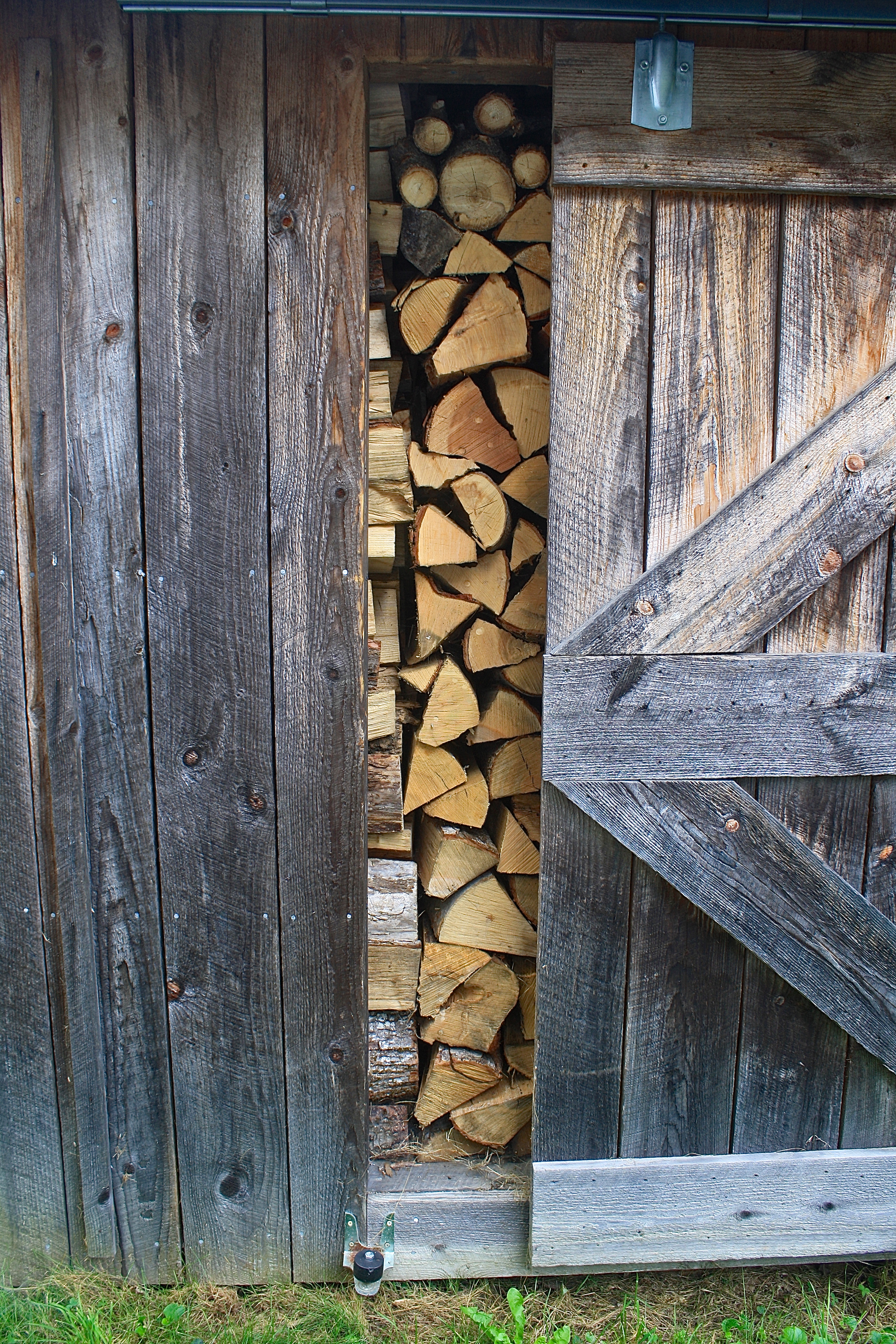
Another spring chore is getting our wood delivered, so it can be stacked in the woodshed to dry over the summer.

Four Cords of Wood

Four Cords of Wood

We order it early before the black flies hatch out, which can drive us crazy, and while it is still comfortably cool doing all that strenuous work. At the rate of four to six pieces per armload, it takes quite a few trips to make this pile disappear! This year I was lucky enough not to stack one single piece of it; my husband and son (yay!) stacked all four cords in two days. That beats our previous record by two days!

IMG_4919There is a lot of security in having a full woodshed – knowing we’ll be warm and cozy next winter. Even though autumn seems a long way off, and spring has barely begun, time has a way of passing much too quickly. We will be glad for the warmth this wood brings us when again the cold winds blow. Now that this chore is done, we are free to focus on all the joy that spring brings, like those red peony shoots I see rising through the mulch.


Posted in Country Gardening, Country Living, My Photos | Tagged , , , , , , , , , , , , , , | 31 Comments

Spring Beauty

Spring Beauty

Scilla siberica ‘Spring Beauty’

Posted in Country Gardening, My Photos | Tagged , , , , | 25 Comments

Pieces of Sky

Pieces of Sky

Cerulean sky reflected in the river.

Posted in My Photos | Tagged , , , , , , , | 24 Comments

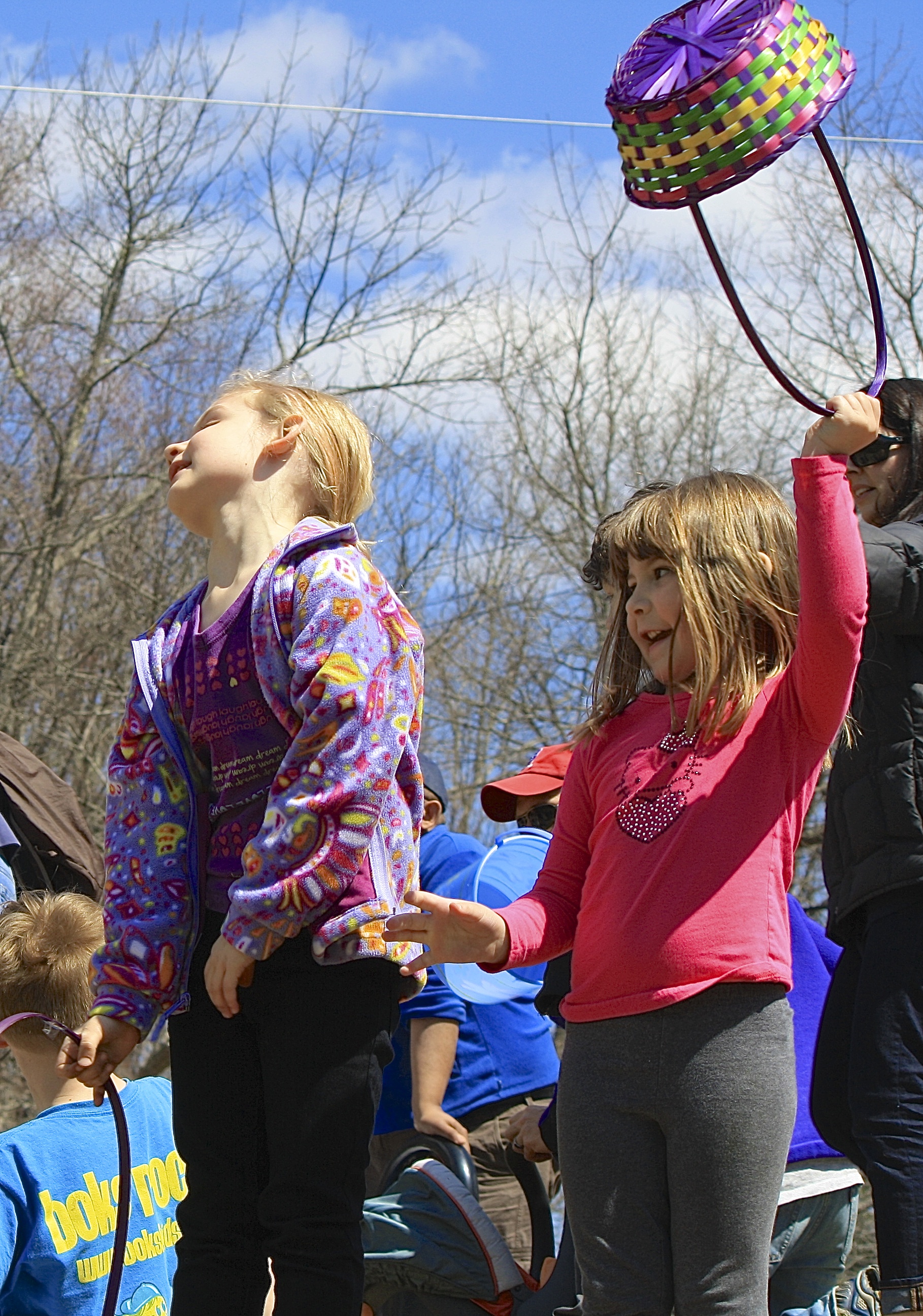
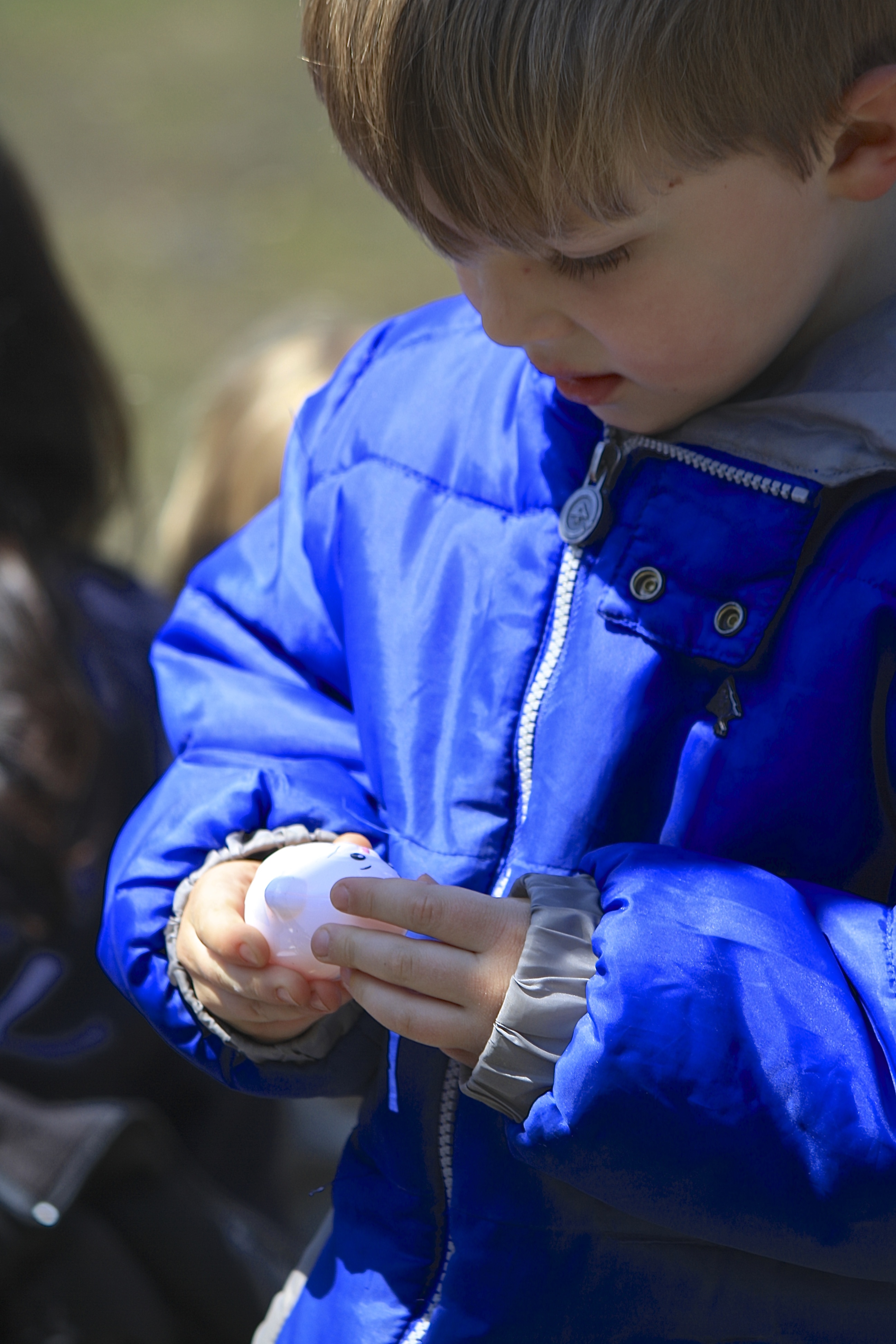
Easter Egg Hunt

IMG_8892Many years ago, soon after I moved to town, I joined a quilting group comprised mostly of older women. One of those women was Thelma French. She was vivacious and fun loving, with a rough, gravelly voice and a mischievous sense of humor. She was kind and thoughtful, and possessing a can-do attitude, did lots of volunteer work around town, particularly with the church. Everyone loved Thelma.

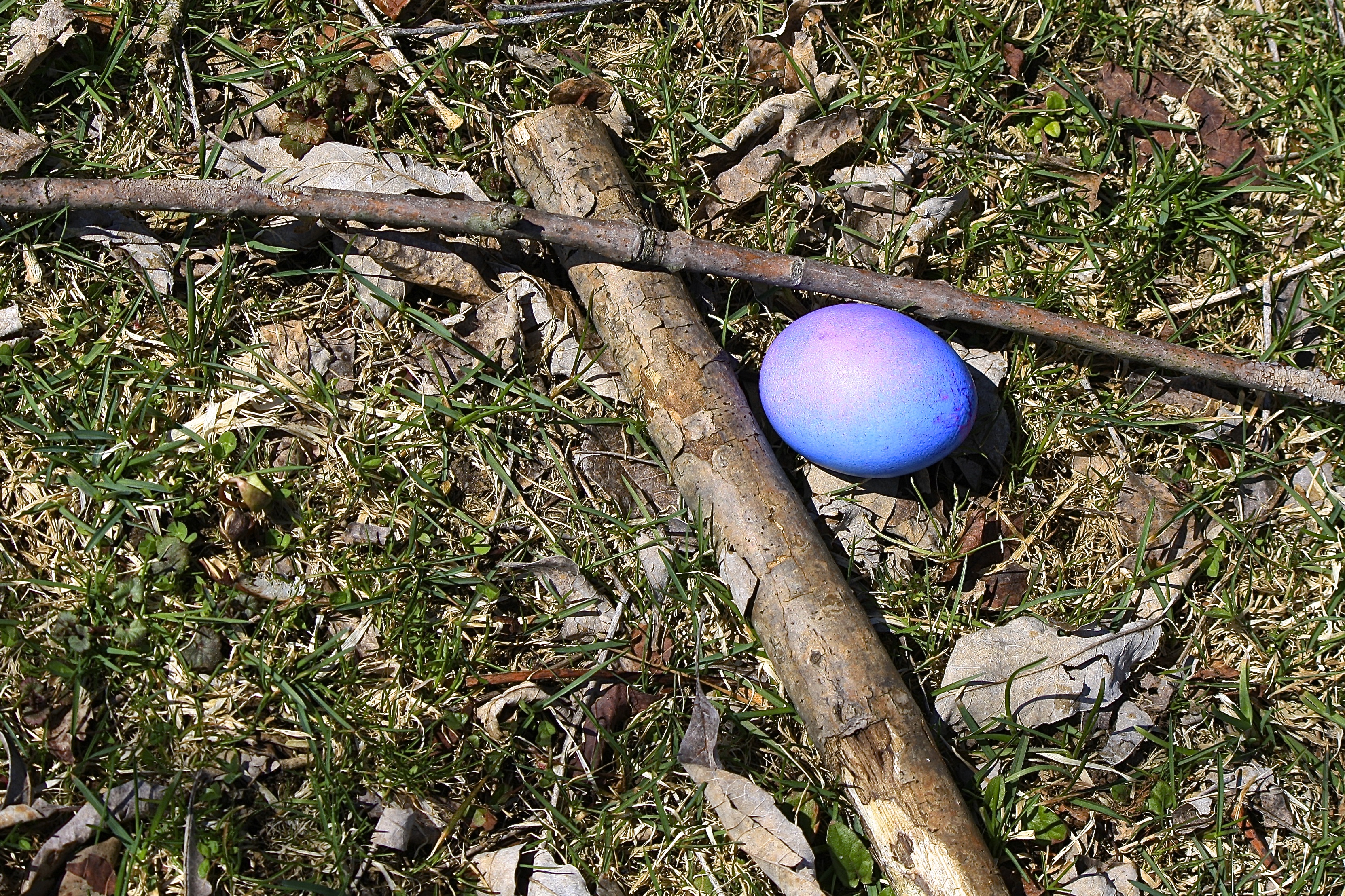
One of her annual traditions was hosting an Easter egg hunt on her front lawn. She gathered older kids and friends together to dye dozens of eggs, which were then hidden under bushes and in the gentle slope of tufted grass in her yard.

Image

Young children of the town were invited to join the hunt and prizes were awarded, but everyone went home with something, usually chocolate candy eggs, which were more popular than the hard-boiled ones! I brought my own children there when they were small and recall the fun watching the dash and search for the eggs, particularly the coveted “Golden Egg,” which yielded a special prize to the finder.

The coveted Golden Egg.

The coveted Golden Egg.

Those of us who knew Thelma still miss her friendly cheer and speak of her fondly. In her honor, the church has kept up the tradition she started so many years ago. The Annual Thelma French Memorial Easter Egg Hunt no longer takes place on her lawn, but at the Town ball field, where volunteers hide hundreds of dyed eggs.

Jan ready to hide eggs.

Jan ready to hide eggs.

IMG_8913The young children of the town gather at the appointed time and with great excitement, hunt for eggs hidden at the base of trees, in tufts of grass and even around the play structure, dugout and bleachers.

IMG_8908IMG_8923IMG_8929IMG_8941

This year, over 300 eggs were hidden and 23 children participated, in three age categories.

IMG_8948The winners for the most eggs collected were: Age 0-3 years – Finn, age 3, collected 17 eggs. Age 4-6 years – Gus, age 5, collected 39 eggs. Age 7-10 years – Patrice, age 8, collected 42 eggs. The golden egg was found by Ben, age 10.

IMG_8963Happy Easter everyone!


Posted in Country Living, My Photos | Tagged , , , , , , , | 29 Comments

Bloodroot

Bloodroot - Sanguinaria canadensis

Bloodroot – Sanguinaria canadensis

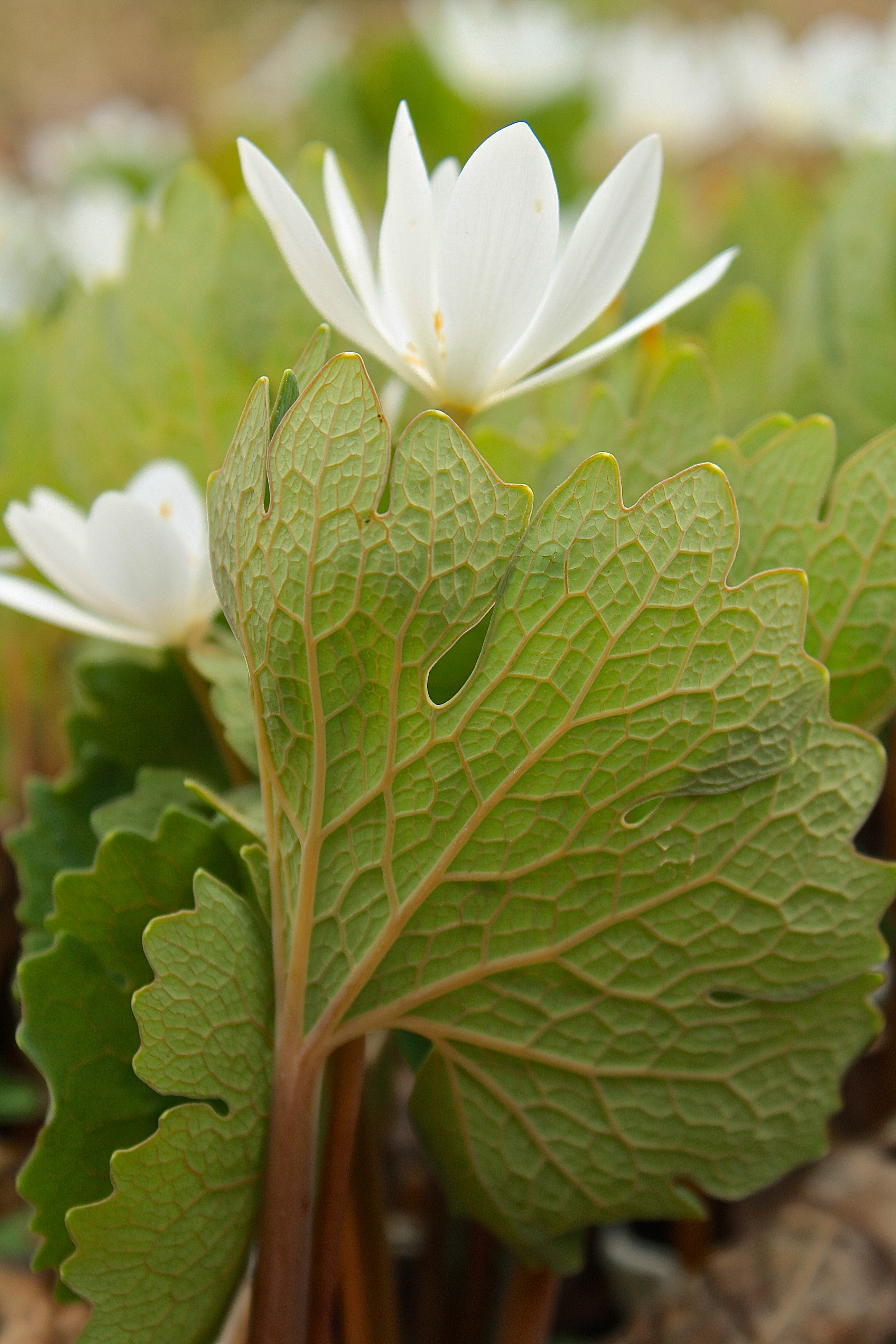
After the snow melts, one of the first wildflowers to emerge is Bloodroot (Sanguinaria canadensis). Native to the eastern U.S. and Canada, it grows in woodlands and moist areas. Its name comes from its reddish-orange sap, which will stain and cause disfiguring lesions on your skin. Native Americans used the root to make a reddish dye, so one wonders if they suffered contact with the plant or if it was diluted when used.

Curiously, they live symbiotically with ants who disperse their seed,

(from Wikipedia) “a process called myrmecochory. The seeds have a fleshy organ called an elaiosome that attracts ants. The ants take the seeds to their nest, where they eat the elaiosomes, and put the seeds in their nest debris, where they are protected until they germinate. They also get the added bonus of growing in a medium made richer by the ant nest debris.”

Bloodroot spreads readily to form large colonies, ideally in moist, pH neutral soil in partial to full shade. My colony grows under deciduous red maple trees, which leaf out after they bloom, and shortly before Bloodroot complete their growing season, becoming dormant in late spring. There is a double cultivar available from nurseries, which doesn’t spread as readily as the native variety as they produce less seed. Collecting plants from the wild is prohibited, so always purchase from a reputable nursery. I believe collecting seed is allowed; however, always leave enough to ensure the growth of the colony.

Posted in Country Gardening, Country Living, Field Notes, My Photos | Tagged , , , , , , , , , , | 31 Comments