 The first of the monarchs (Danaus plexippus) I have been fostering on my kitchen counter this past month hatched today and it’s a female. Like any proud parent, I think she is perfect and beautiful! I feel hopeful for her future, but it will be a long road for her, fraught with obstacles. After fattening up on coneflower, Joe Pye weed, zinnias and other favorite flower nectars, she sails 2,500 miles to the Michoacan Mountains in Mexico.
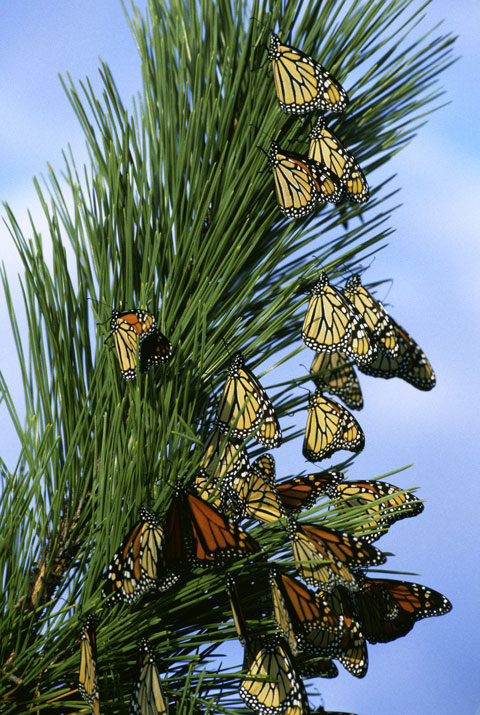
Overcoming human activity such as speeding autos, loss of nectar feeding habitats, as well as excessive cold, drought and predation will be daunting. If she reaches her winter roost site in the few remaining acres of oyamel pine trees (which are cut for their valuable timber by the local people), she must safely survive possible severe cold or snowstorms, predatory birds and mice that take advantage of the bounty of millions of clustered monarchs. If she survives until next Feb./March, she will then fly 500-700 miles north, mate, lay eggs on milkweed and then die. Her legacy will be offspring that repeat this process 3 more times, until her great-grandchildren reach us in July to start the process once again. How can anyone not be impressed by such a lifecycle?
Population estimates in 2013 numbered 33 million, down from a peak of one billion butterflies. A sustainable average is estimated to be 300 million. One particularly cold winter in the 90’s, 95 million died, so researchers were justly worried the species was at risk for extinction.
The good news is that many rallied to save this imperiled species by raising awareness, planting milkweed and other flowers favored by adults, eliminating the use of pesticides and Mother Nature herself gifting them with mild winters and ending the Texas drought that risked the first stage of their northward migration in spring. Last winter’s estimated number was 143 million, about halfway to the sustainable number goal.
 This is the first year in many that I have even seen monarchs, let alone had breeding adults in July. While we still have a way to go, with a few more good years, we may reach sustainable numbers once again.
Truly a miracle of nature, this rare evolutionary anomaly makes this unique insect so worth saving. (Only one other insect, a dragonfly, migrates south, but only half the distance as monarchs and without generational changes.)
Below is a slideshow of this girl’s transformation (forgive the fact that some were taken through a glass jar):
This slideshow requires JavaScript.
There were three successive waves of eggs laid in my milkweed patch this year that I have largely left to fend for themselves. At risk of predation by spiders and wasps (yes, contrary to the myth that eating toxic milkweed makes them immune), I chose to raise a few to increase their chances of survival.
When I think back to when I was a kid, raising monarchs was a fun science project. Today, it has become a quest for species survival.
Sources:
http://www.learner.org/jnorth/tm/monarch/conservation_overview.html
http://www.monarchwatch.org
http://www.monarch-butterfly.com/monarch-migration.html



 Today, I’m celebrating my fourth blogiversary! Double eights are auspicious, a symbol representing infinity, so may this blog continue to expand and grow infinitely! I can’t believe how quickly the time has passed since I first nervously pressed ‘publish.’ I look back at that

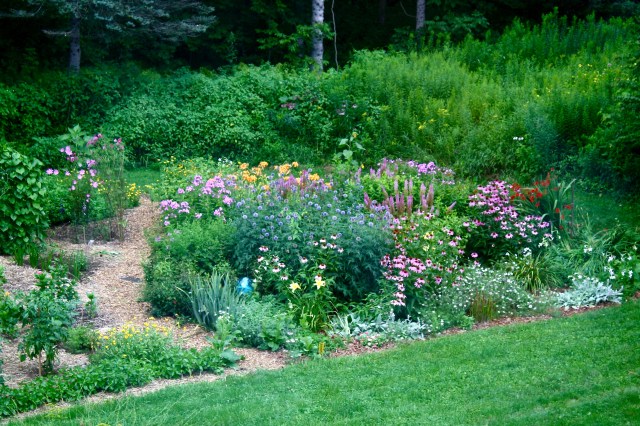



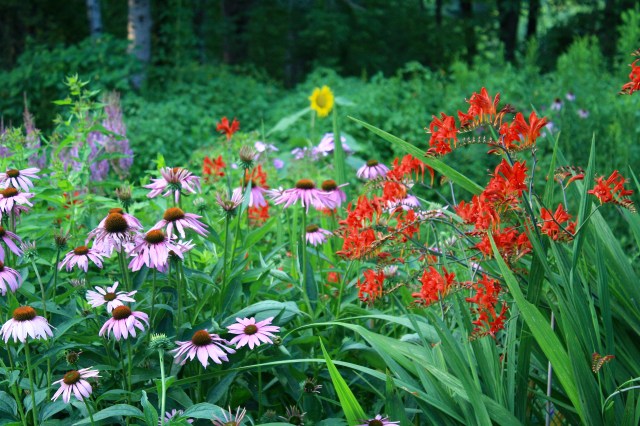
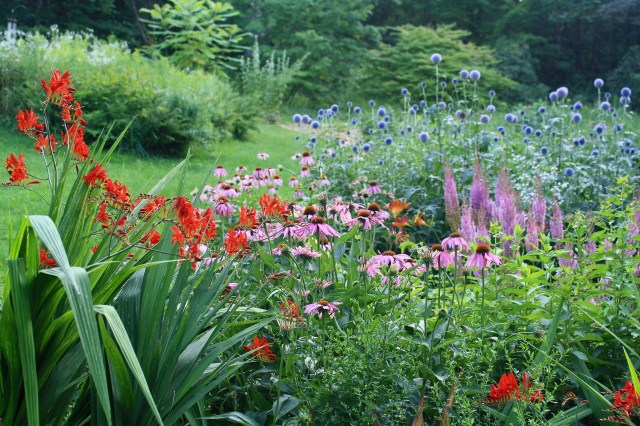 Purple Coneflower (Echinacea purpurea) are flowering abundantly, attracting many different bees and butterflies.
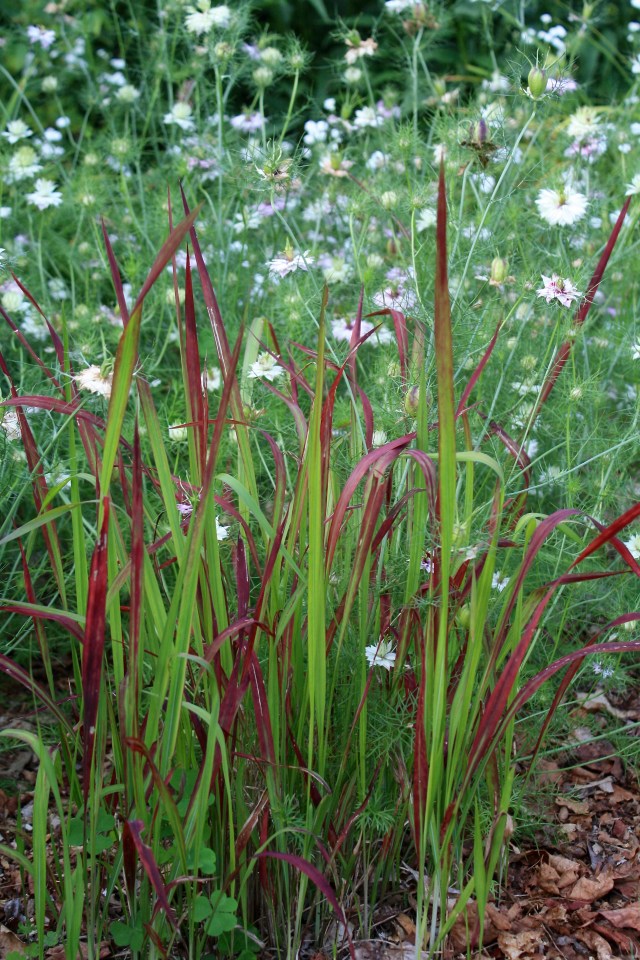
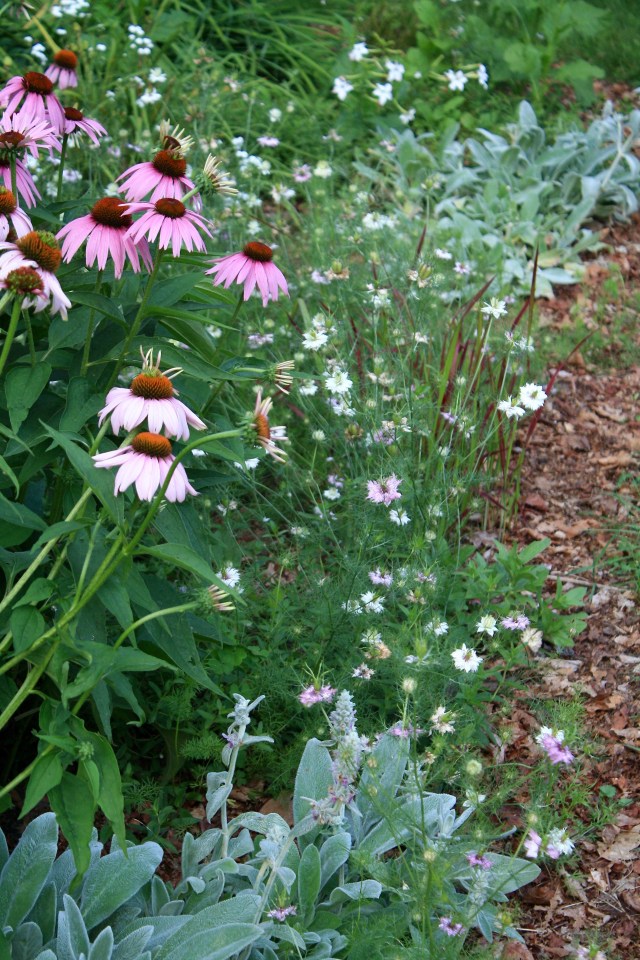 Along the front, Lamb’s Ears (Stachys byzantina) bookend Japanese Blood Grass (Imperata cylindrical) surrounded by Love-in-a-Mist (Nigella sativa).
 Tucked in the middle and back are red-burgundy and double orange daylilies (Hemerocallis). The sweet peas (Lathyrus odoratus) have finally begun to blossom in earnest, delighting us with their scent.
 Sunflowers are budding up and will soon give a great show along the back.
 Thanks to Cathy at
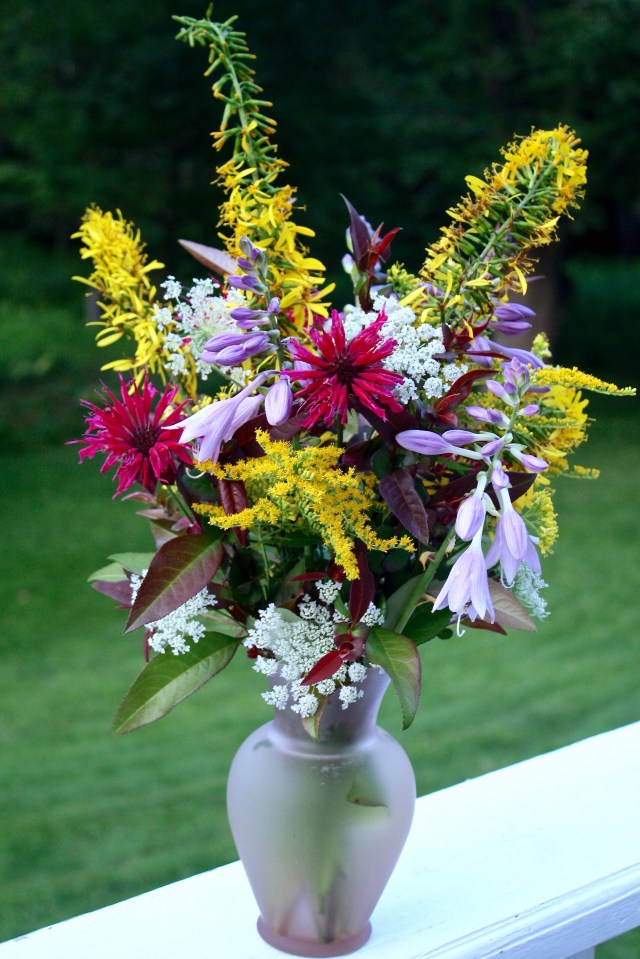
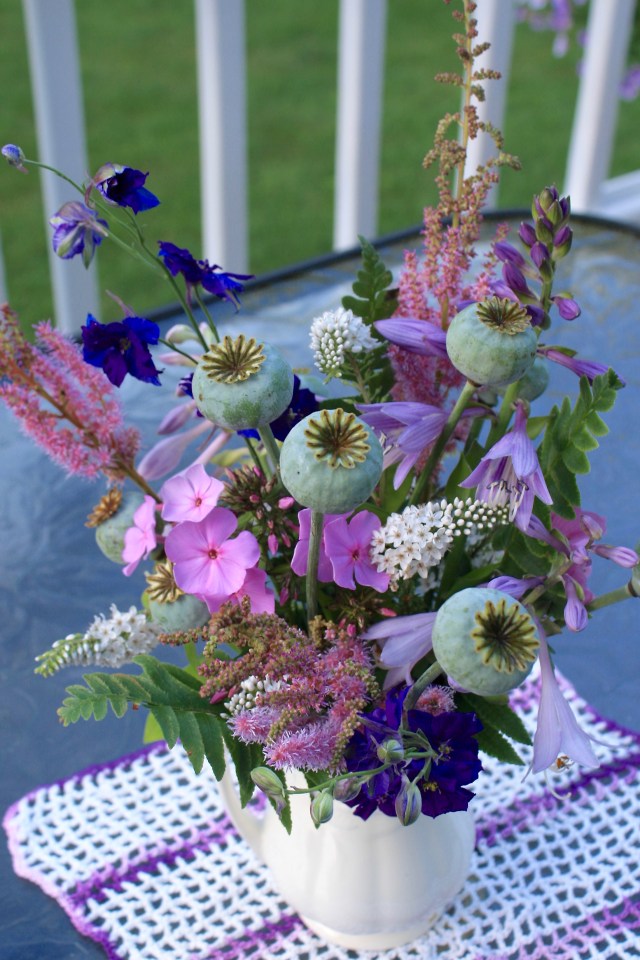 Topped by a starry mandala, gray-green poppy seed pods (Papaver somniferum) vie for attention amid purple larkspur (Consolida ajacis) and lavender Hosta flowers.


