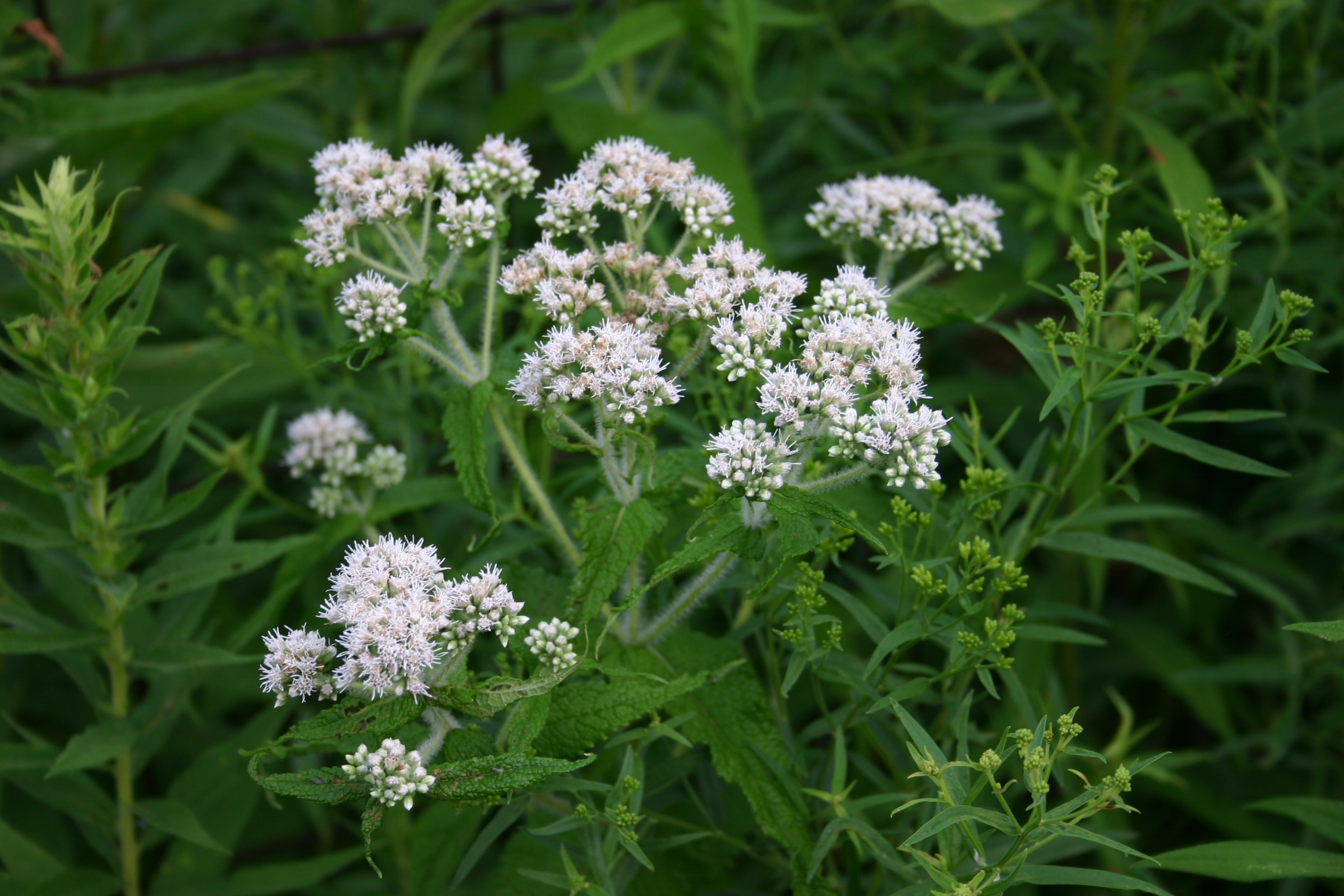
Although my gardens that I have been working in all summer have been blooming abundantly, it occurred to me that I haven’t written about them or posted photos. How remiss of me! So here is a recap of what has happened this growing season.
May

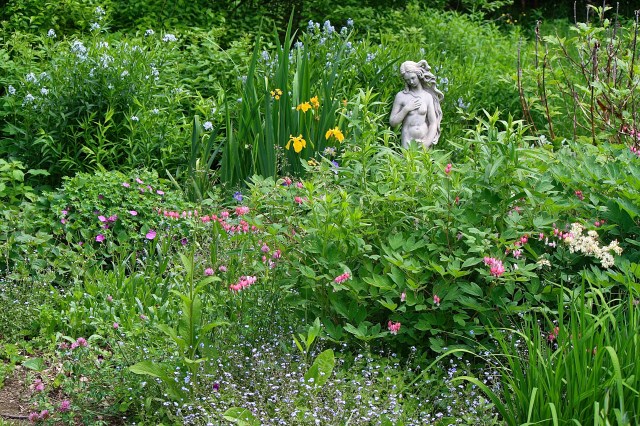
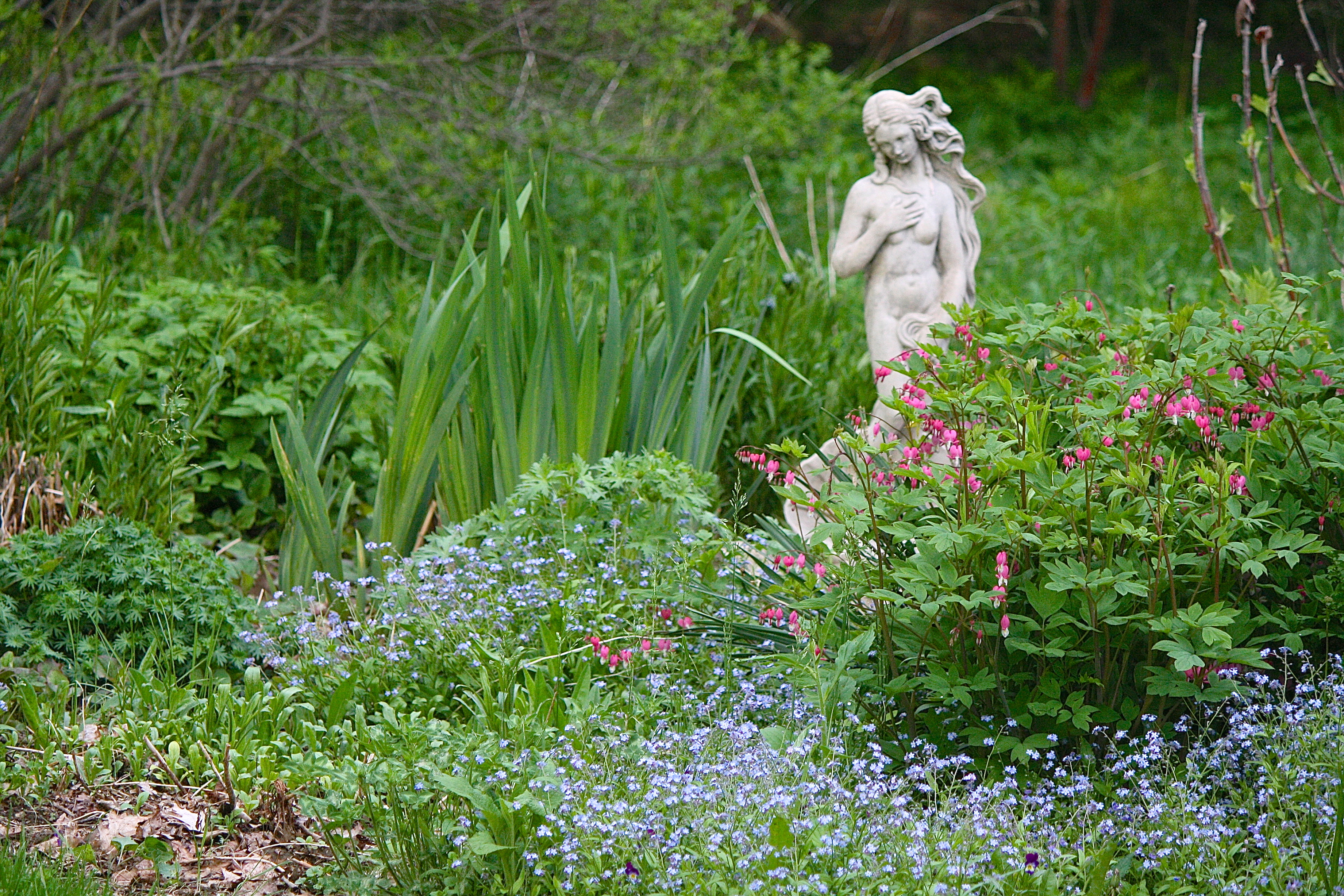
A statue of Botticelli’s Venus, the Roman goddess of Love, overlooks a Bleeding Heart (Dicentra spectabilis) and Forget-me-nots (Myosotis sylvatica). Molto romantico!
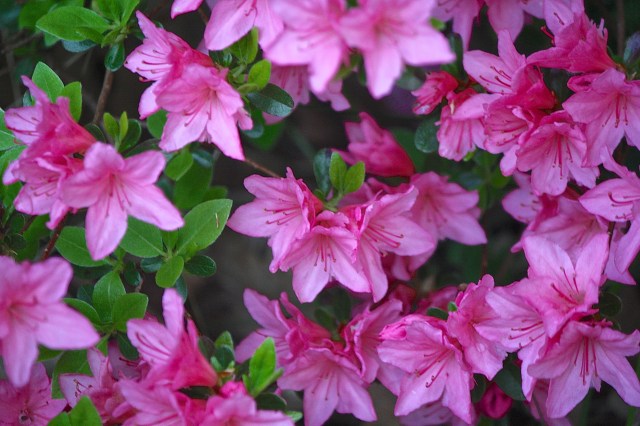
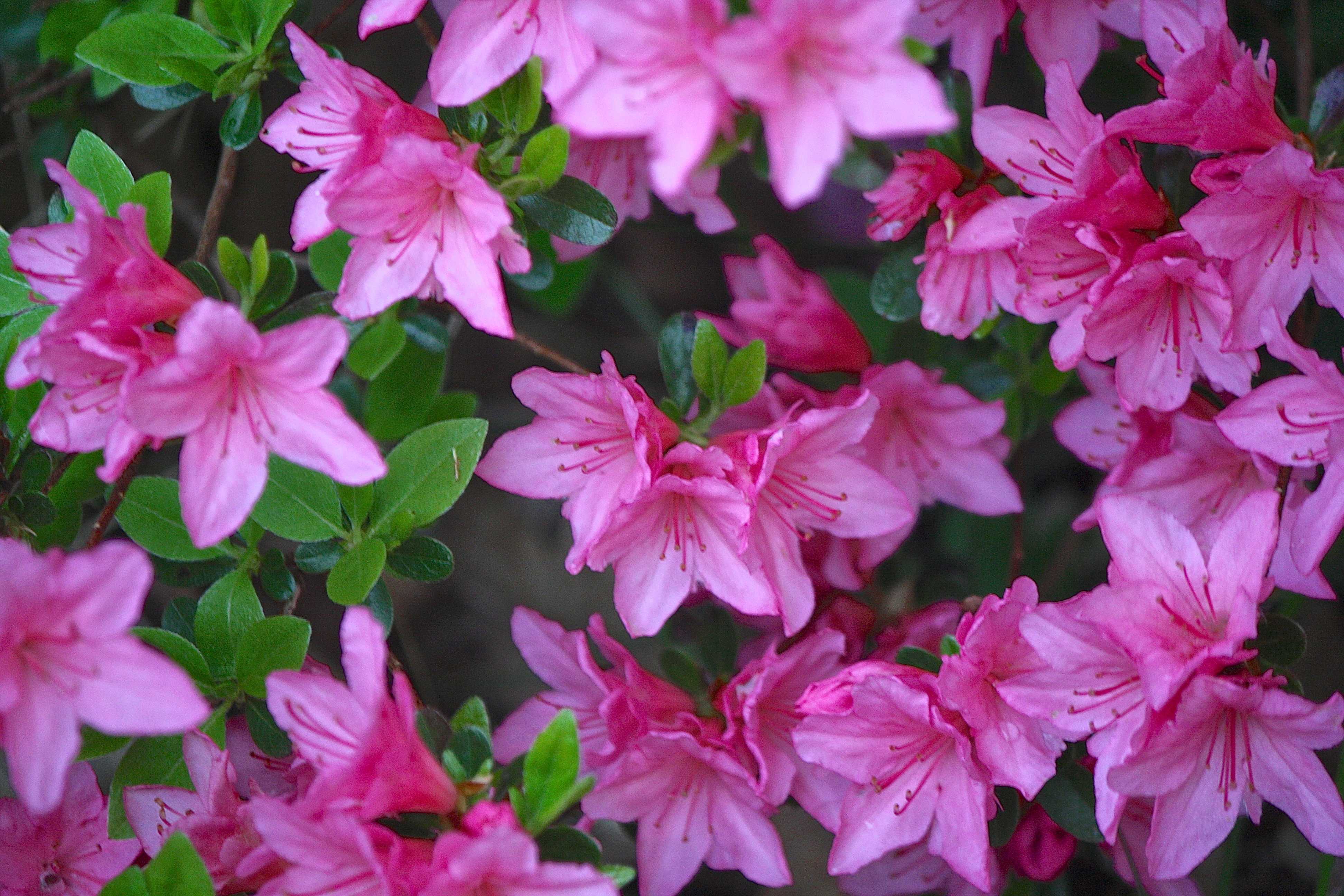
Below, this pink Azalea (Rhododendron sp.) on the west side of the house bloomed like crazy. Such a cheerful pink and the bumble bees loved it.
June
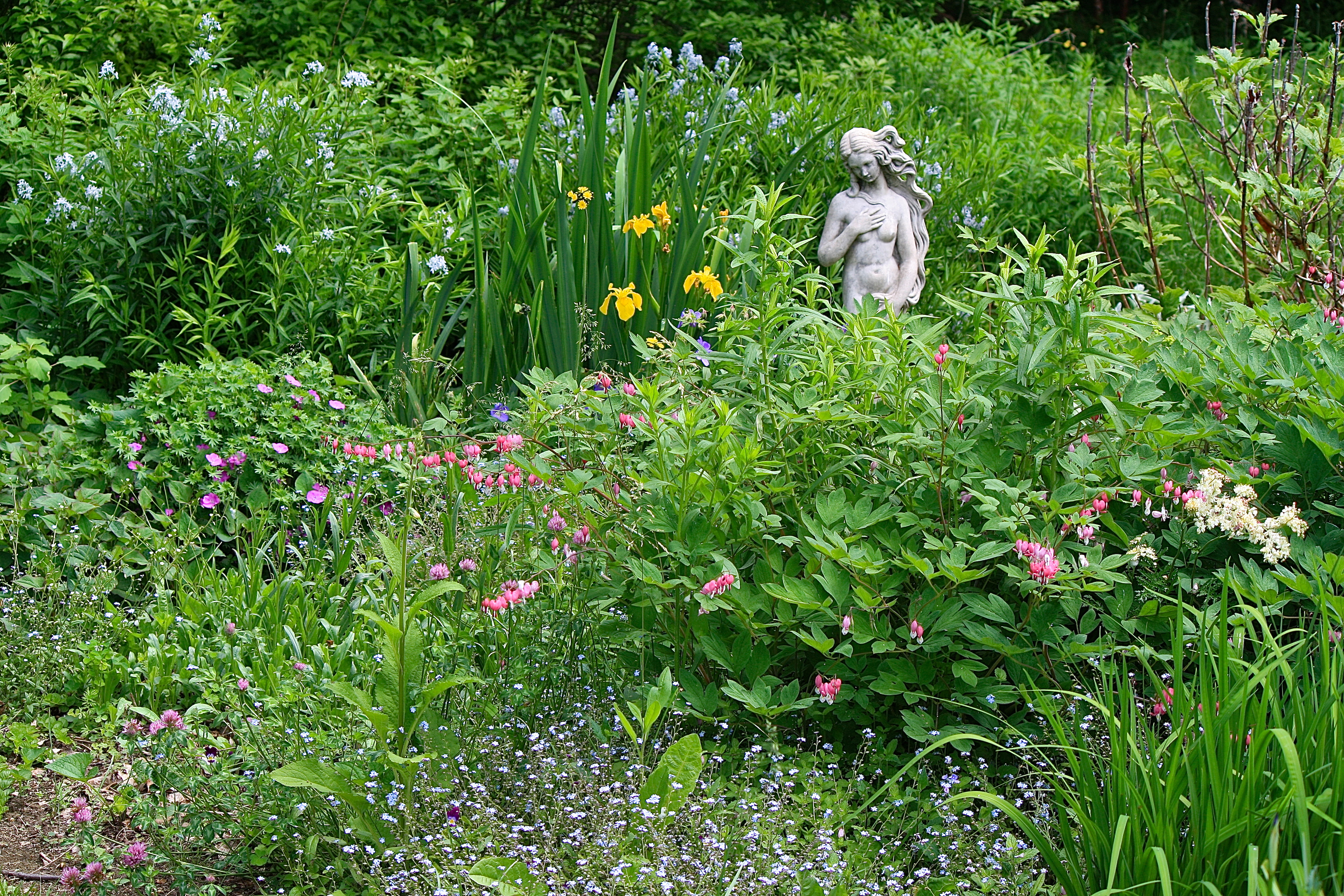
A few weeks later: Blue Star (Amsonia tabernaemontana), Yellow Iris (Iris pseudacorus) and Geranium ‘Johnson’s Blue’ and G. sanguineum have started blooming. The garden is filling in.
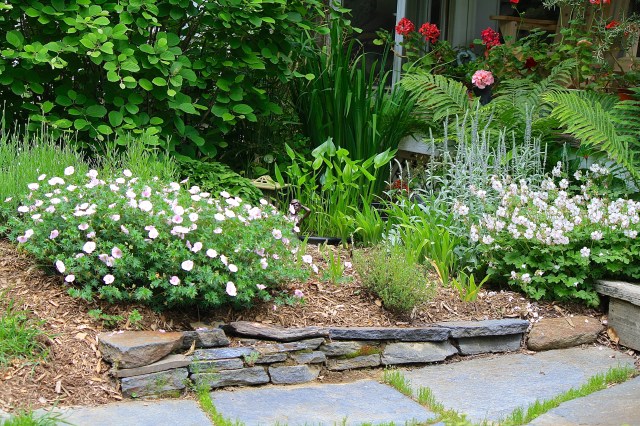
By the front steps, a small garden with a pond and fountain (good feng shui!) planted with Corkscrew Rush (Juncus effusus), Pickerelweed (Pontederia cordata), Taro (Colocasia esculenta ‘Black Magic’) and Waterlilies (Nymphaea sp.) is a haven for frogs. Two more types of Geranium (G. sanguineum var. lancastriense and G. x cantabrigiense) flank Crested Iris (I. cristata) and English Thyme (Thymus vulgaris). Lavender (Lavendula angustifolia) and Speedwell (Veronica incana) are just behind the Geraniums. Fothergilla (F. gardenii), Japanese Iris (I. ensata), Ostrich Fern (Matteuccia struthiopteris) and Common Geraniums (Pelargonium cv.) are in the background.
 July
July
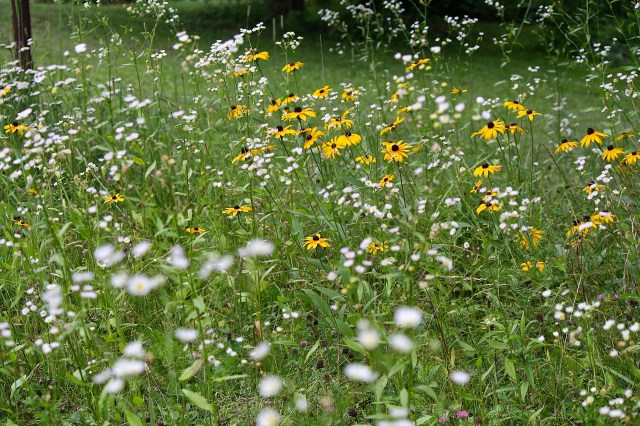
July is when the wild meadow flowers really get going. Below are Daisy Fleabane (Erigeron annuus), which I love for its sweet, honeyed fragrance and looking somewhat like an airy Baby’s Breath, Black-eyed Susan (Rudbeckia hirta) and Yarrow (Achillea millefolium). Red Clover (Trifolium pratense) and Oxeye Daisy (Leucanthemum vulgare) have already gone by. The pollinators love these plants! Because this area is not mowed, it is teeming with life compared to the lawn in the background. Spiders, insects, frogs, toads, snakes and rodents create a natural ecology. I mow the fields in the late fall or early spring when all is dormant to keep the habitat open and free of trees and shrubs, which would move in within a few years.
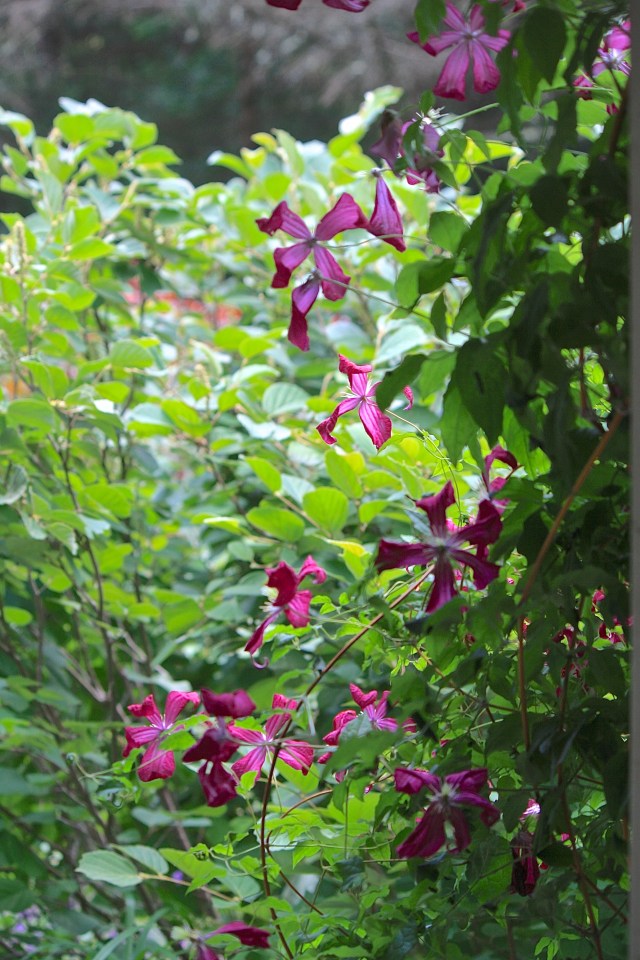
Another July event is the blooming of Clematis ‘Amanda Marie’ next to the front porch. With its outstanding color, a vibrant deep-red, almost burgundy, it performs well year after year with only a quick trim in early spring and a bit of compost.
 August
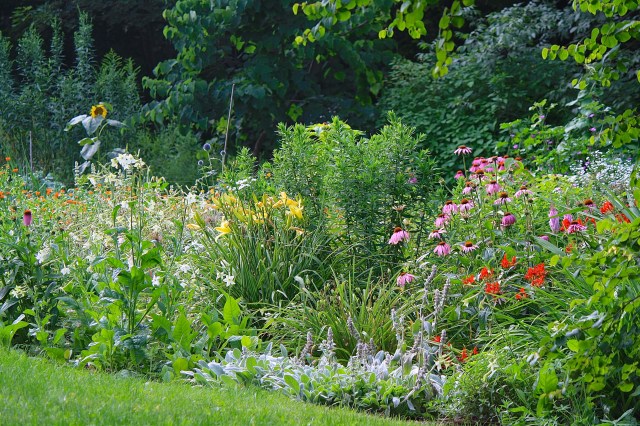
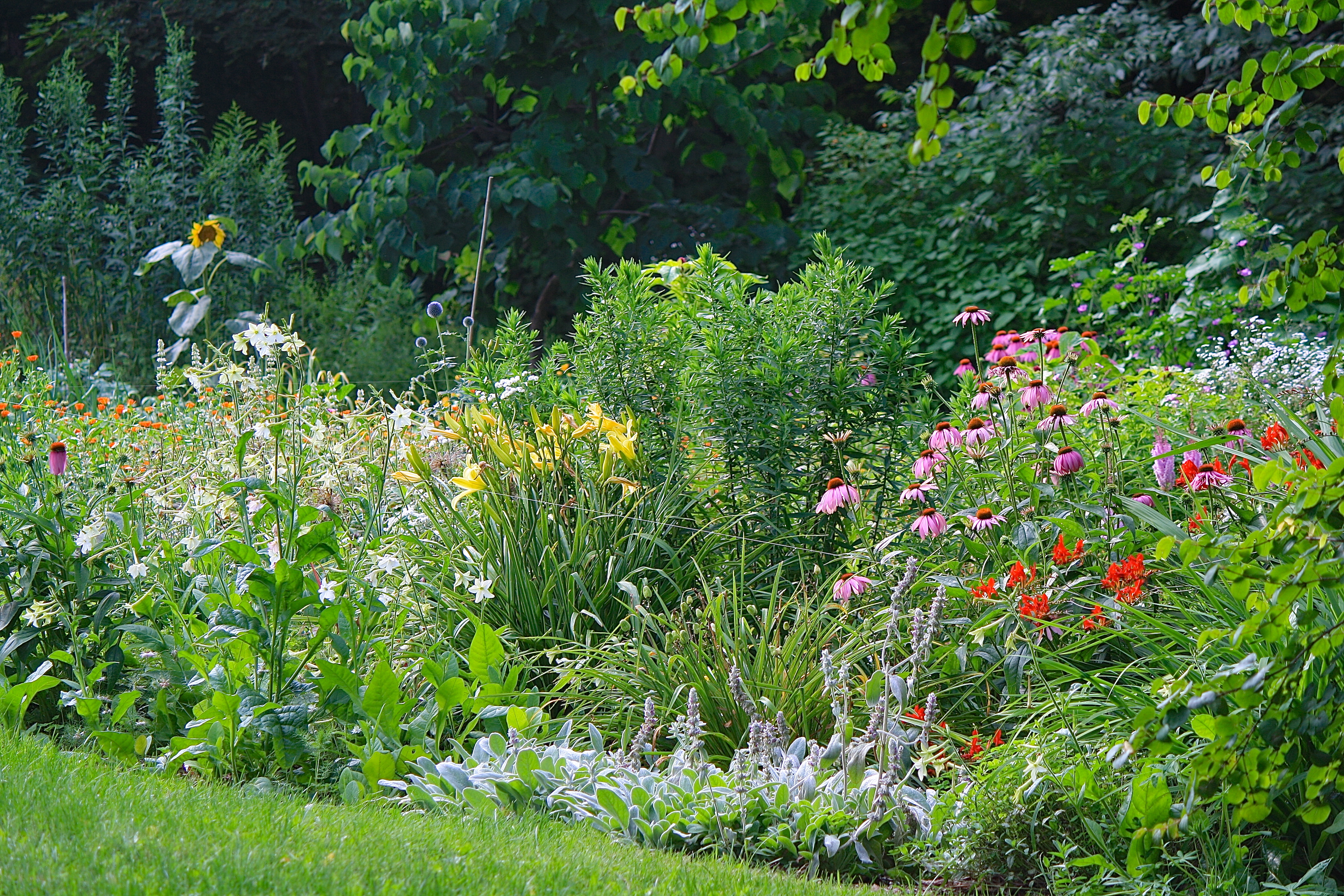
Here’s the largest garden in the backyard at the beginning of August. Since we eat three meals a day seated on the deck (weather permitting), I try to make this vibrant all summer long. The highlights are flaming orange-red Crocosmia ‘Lucifer’, Coneflower (Echinacea purpurea), Yellow Daylily (Hemerocallis ‘Hyperion’) and self-sown white Flowering Tobacco (Nicotiana alata). Out of sight, pink, purple and white Cleome (C. hassleriana) and Sunflowers (Helianthus annuus) add height and color to the back. White and pink Phlox (P. paniculata) and New England Aster (Symphyotrichum novae-angliae) will follow shortly.
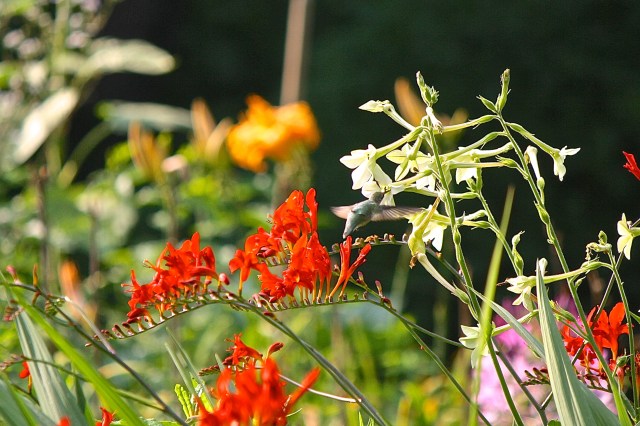
 Below is a close-up of a hummingbird visiting the Nicotiana and Crocosmia.
 I have to include photos of the purple Hosta flowers with the golden sunflowers in the background. The birds love these sunflowers and eat them as soon as they are ripe.


September
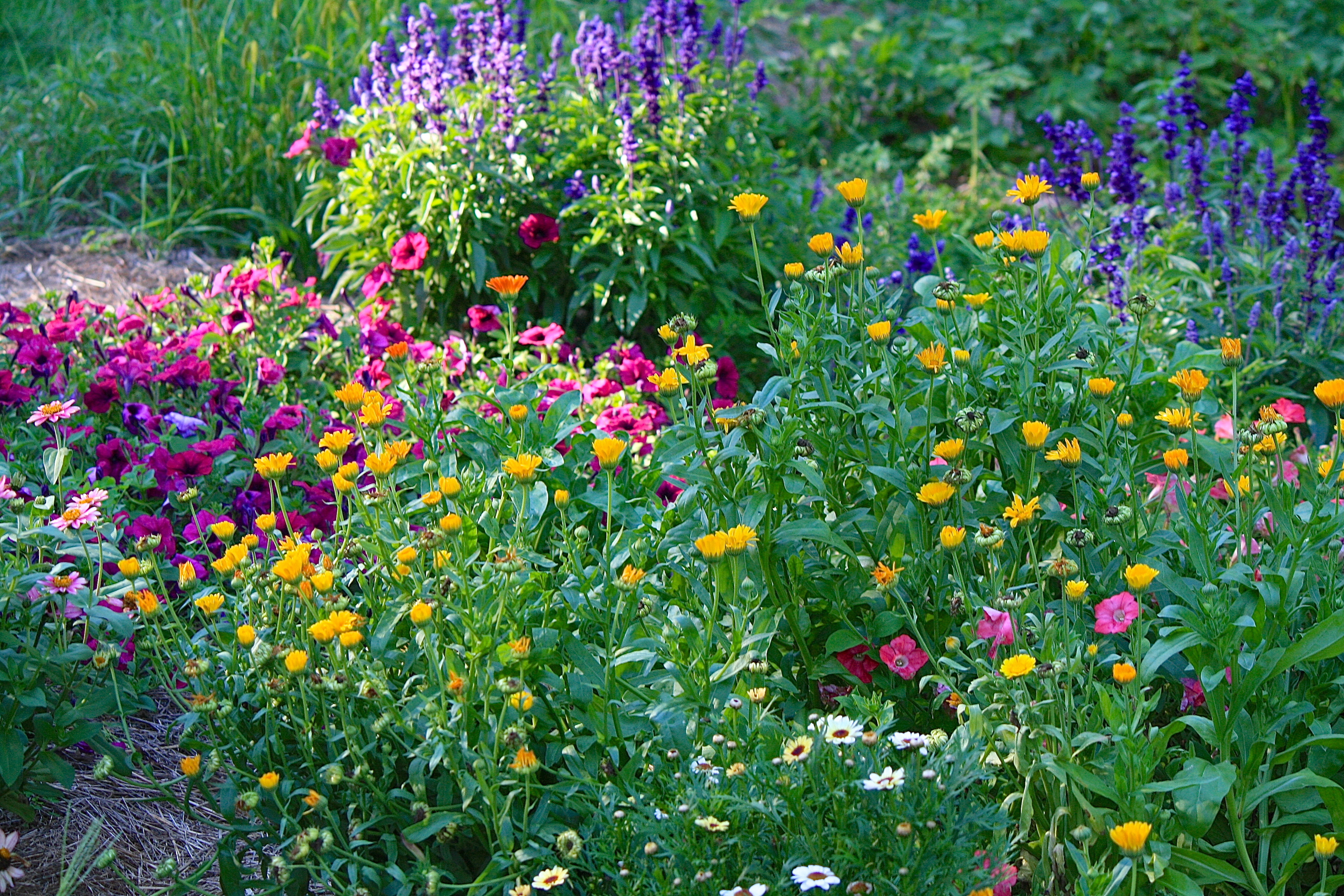
The annuals are an explosion of color and the delight of the garden these days. Purple Mealy-cup Sage (Salvia farinacea), vibrant Petunia ‘Purple Wave’ and golden Pot Marigold (Calendula officinalis) provide a grand finale for the end of the garden season.

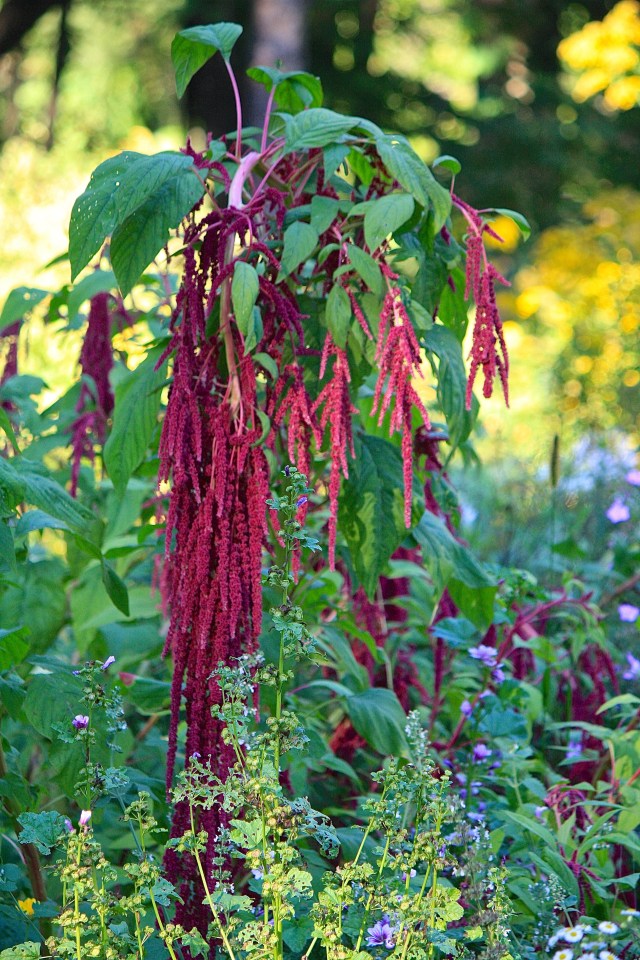
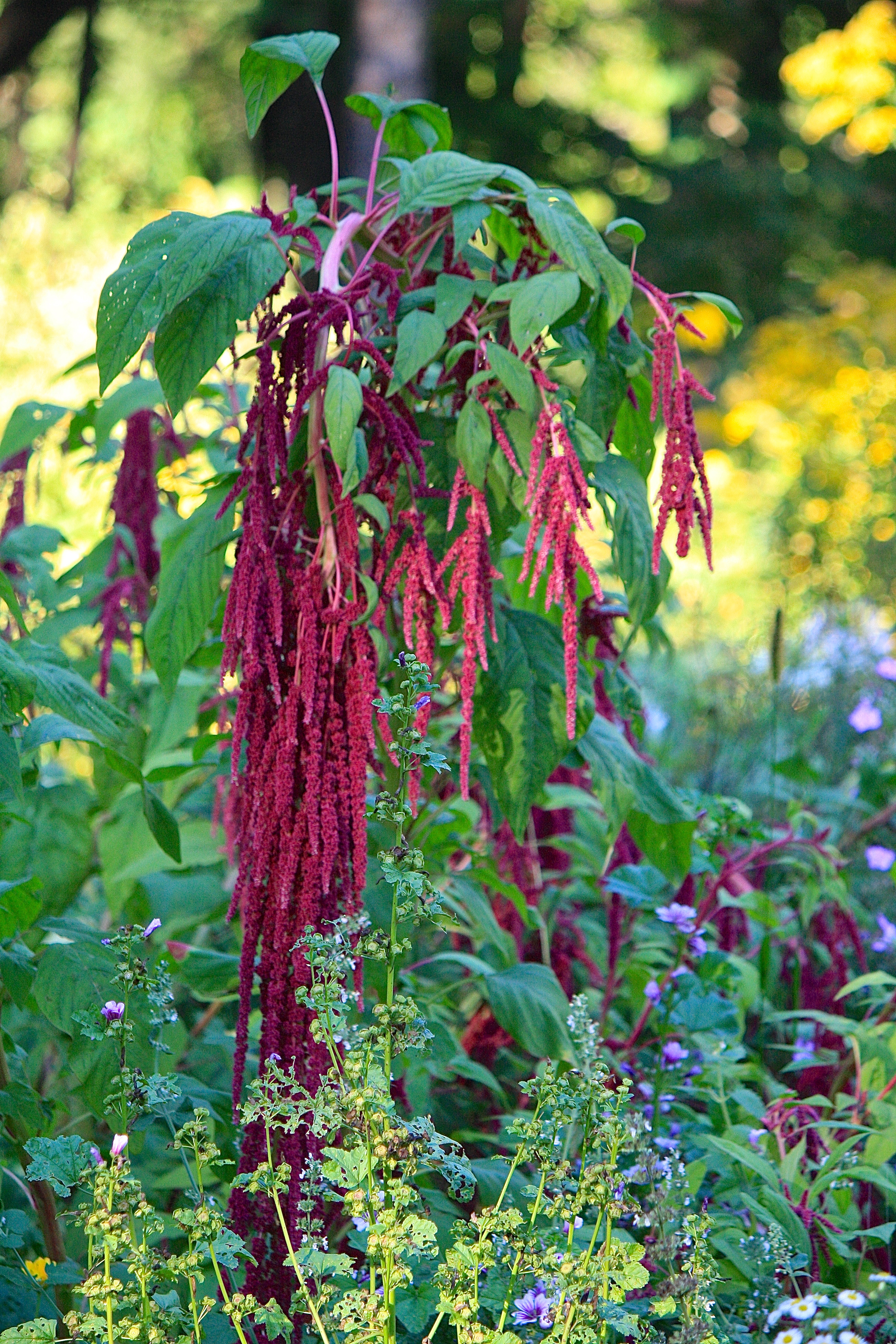
Love-lies-bleeding (Amaranthus caudatus) is a marvelous annual with its pendulous flowers looking like burgundy dreadlocks! Goldenrod in the background provides a nice contrast.
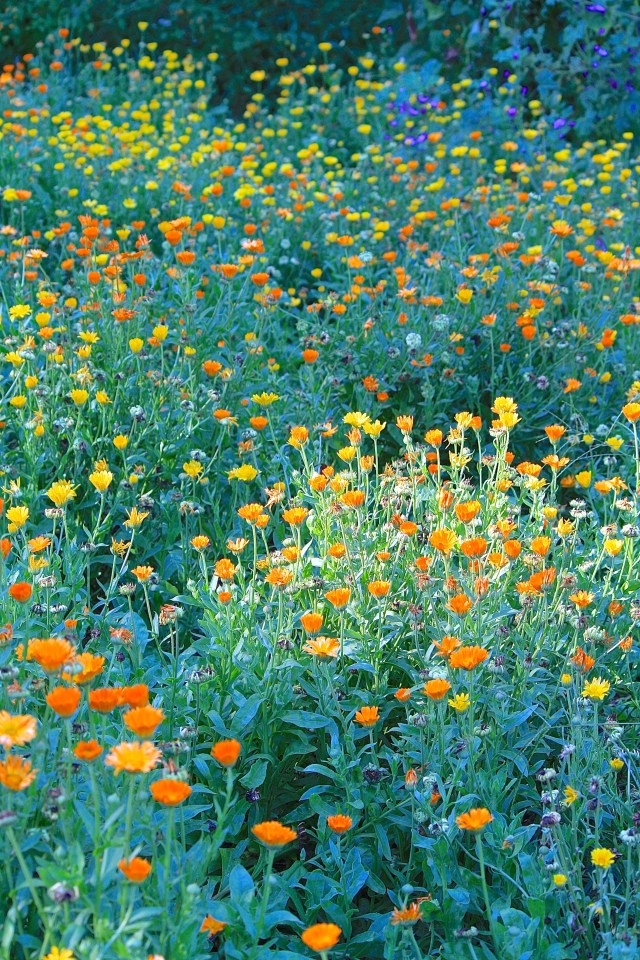
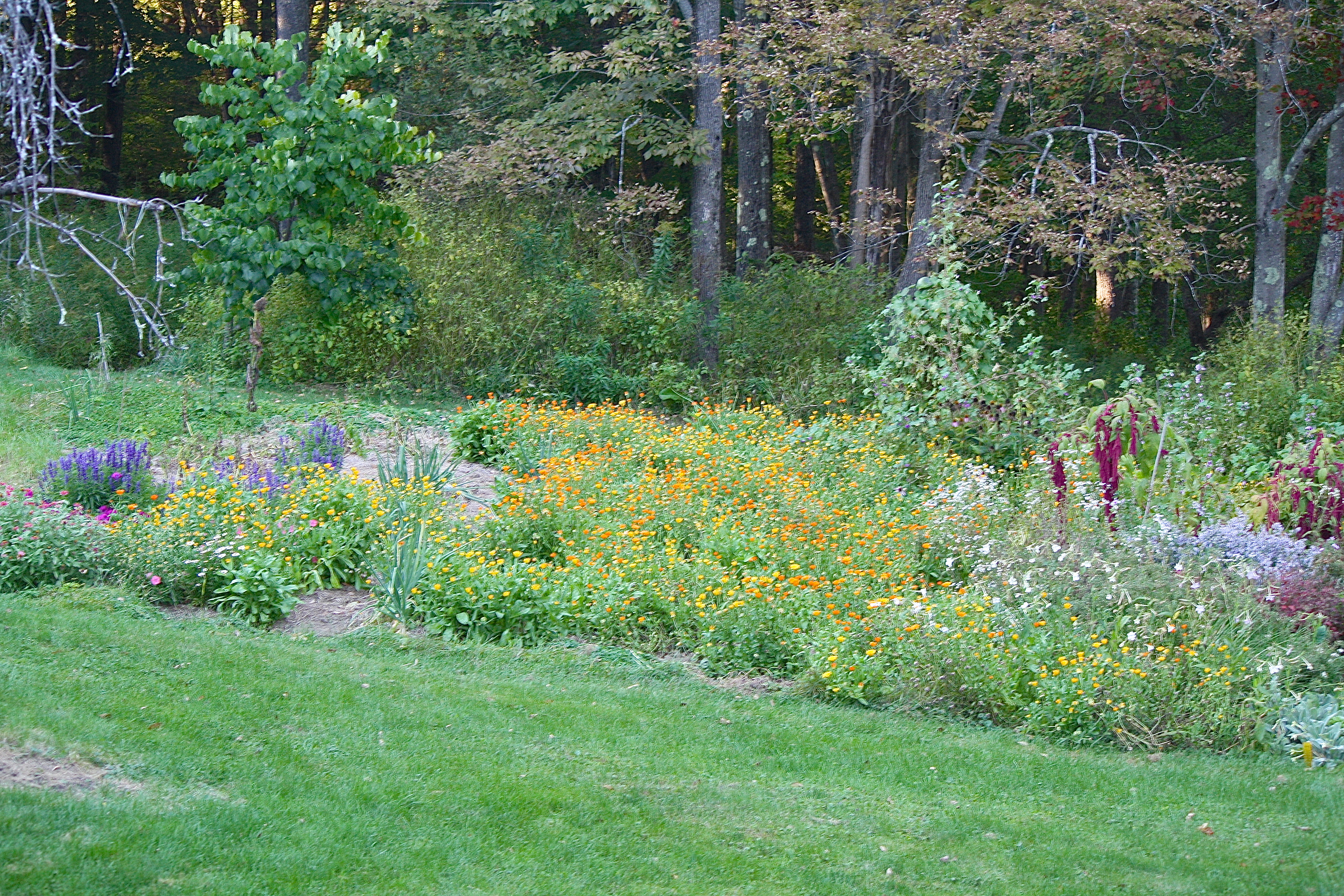
Calendulas self-sow every year, taking over large areas of the garden, which I don’t mind at all – they are breath-taking to behold! Another self-sowing annual, purple Morning Glory (Ipomoea purpurea) is in the background.
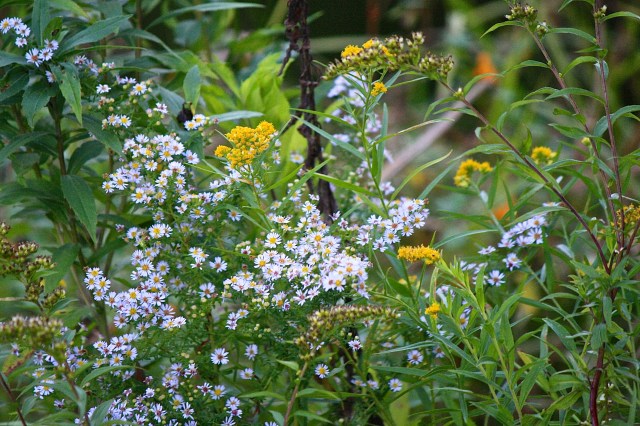
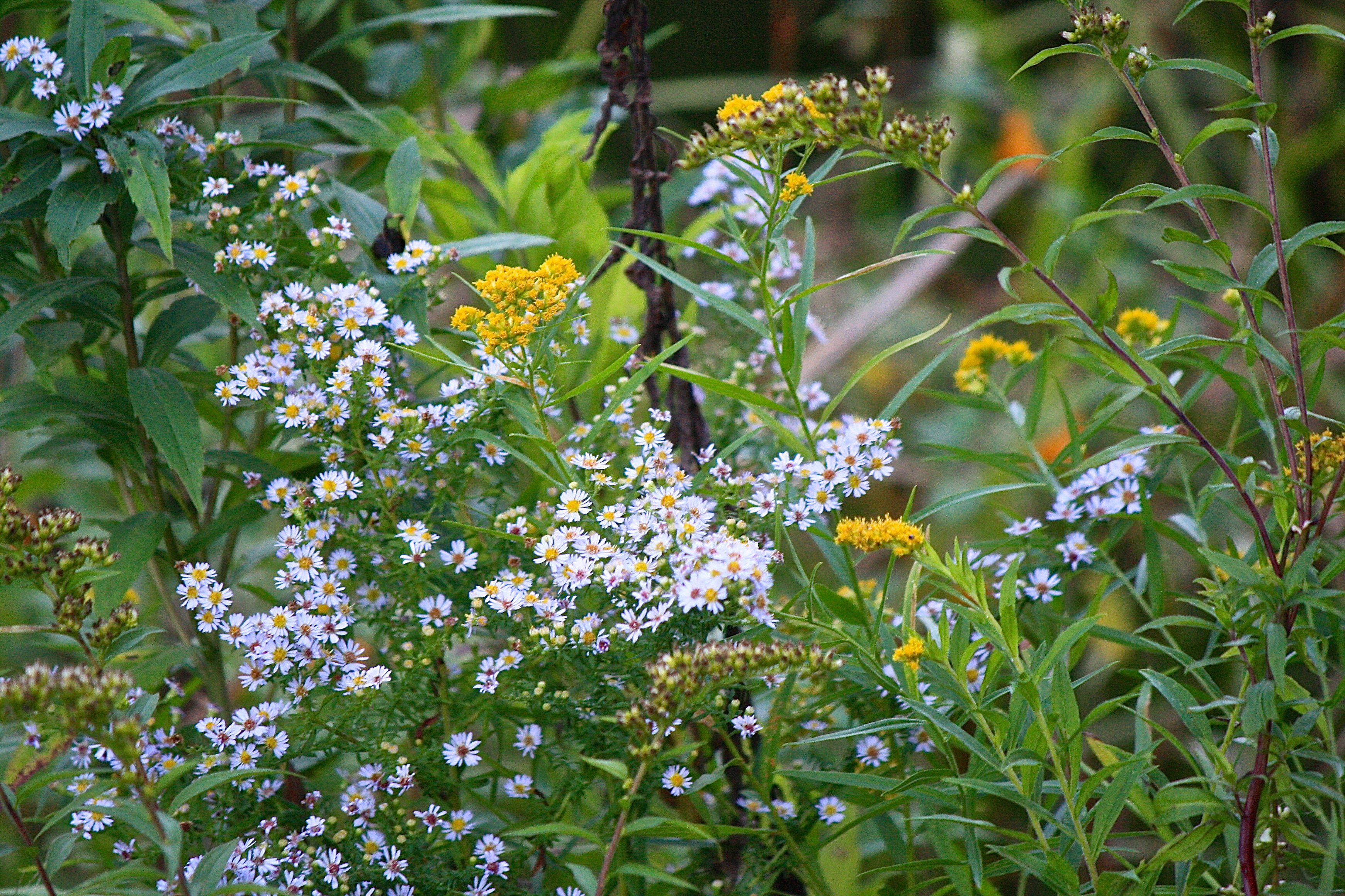
Although we still have perhaps a month to go before frosts completely diminish the garden, the plants are winding down; with their seed set, their mission is fulfilled. In the fields, the last wands of the goldenrod intermingle with New York, Heart-leaved and Calico Asters (Symphyotrichum novi-belgii, S. cordifolium & S. laterifolium, respectively) weaving a beautiful tapestry of gold, lavender, purple and white.
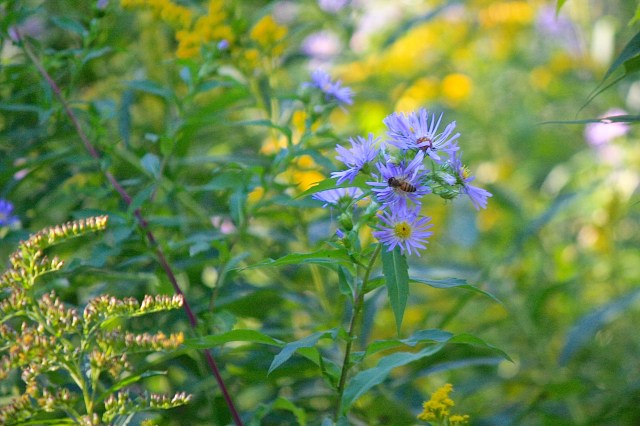
The bees, wasps, butterflies along with a few other insects dance among the blooms, storing for the winter ahead or completing their life cycles after ensuring their next generation will emerge in the coming spring. Crickets sing all day long, a background sound that I love and will miss when it no longer accompanies me at my work or as I drift off to sleep at night. Such are the seasons; I must not resist the tide of time, but instead embrace and accept with gratitude the beauty of each and every new day.


















 Eliza Waters